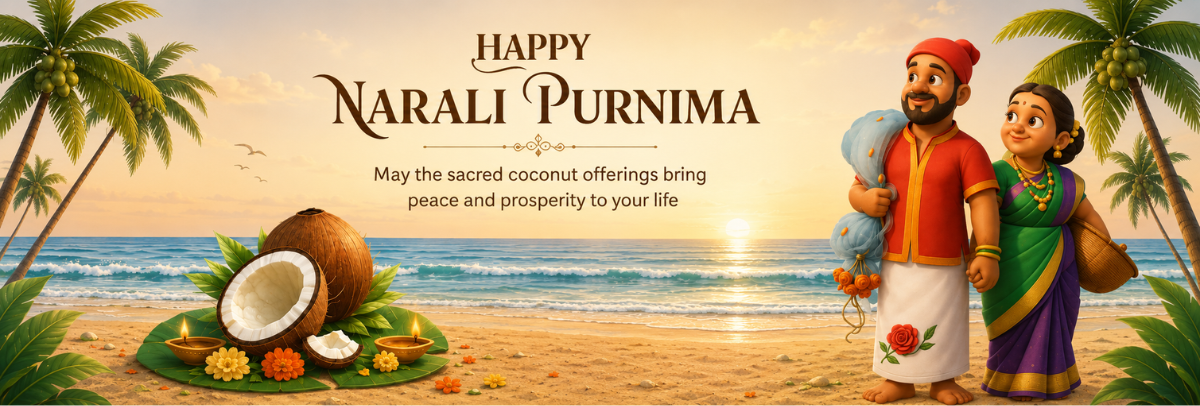
Walk along Mumbai's fishing hamlets in the last week of August and you will notice something unusual happening at the water's edge. Coconuts wrapped in marigold, streaked with turmeric and vermilion, are being carried down to the shore in small processions. Children run ahead. Elders walk slowly, holding the coconut with both hands as though it were something fragile. This is Narali Purnima, one of the more distinctive festivals on India's western coast, and it ties an entire community's fortunes to the sea that surrounds it.
Narali Purnima 2026 falls at a point in the calendar when the monsoon has already battered the Arabian Sea coast for weeks. For fishing families, particularly the Koli community of Maharashtra, the festival is less about ritual for its own sake and more about a practical, emotional turning point.
Narali Purnima 2026: Date and Timings
Narali Purnima always falls on the full moon of the Hindu month of Shravan, which places it firmly within the monsoon calendar rather than being fixed to a Gregorian date each year.
| Occasion |
Date/Time |
| Narali Purnima 2026 |
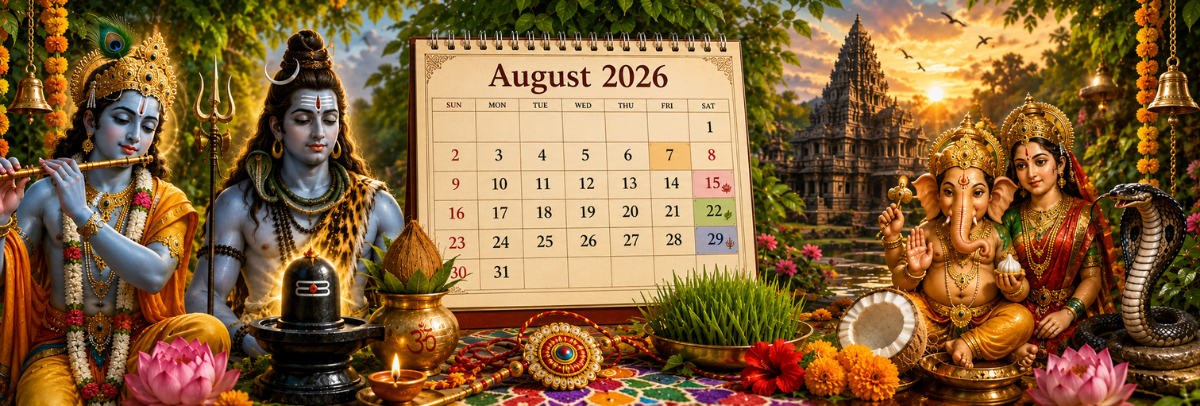
Friday, 28 August 2026 |
| Purnima Tithi Begins |
27 August 2026, 9:08 AM |
| Purnima Tithi Ends |
28 August 2026, 9:48 AM |
Because Narali Purnima coincides with Shravan Purnima, families sometimes debate which day to observe the rituals on, particularly when the tithi spans two dates as it does this year. Most communities along the Konkan and Mumbai coast will mark the main celebrations on 28 August 2026. That said, exact puja timings can differ from one locality to another depending on local Panchang calculations, so it is worth checking with a nearby temple or community elder if you are planning to take part.
What is Narali Purnima?
The word "narali" comes from naral, the Marathi word for coconut, and Purnima simply means full moon. Put together, the name literally describes what the day is about: a full moon festival centred on the coconut.
For most of India, Shravan Purnima passes as one full moon among many. Along Maharashtra's coastline, though, it carries a different weight. The Koli community, whose generations have built their livelihood on fishing in the Arabian Sea, treat this day as a hinge point in their working year. The monsoon months are dangerous for small fishing boats, so many families pause fishing altogether during the heaviest rains. Narali Purnima traditionally signals that the roughest weather is easing and that boats can begin preparing to return to open water.
Central to the day is Lord Varuna, the deity traditionally associated with water, rain and the seas in Hindu belief. Offering a coconut to the sea on this day is understood as an offering to Varuna himself, a request for calm waters in the months ahead.
Why is Narali Purnima Celebrated?
Honouring Lord Varuna
According to the tradition, moods of the sea fall under Lord Varuna. Fishing families offer prayers on this day asking for his protection, seeking calmer waters and fewer storms once boats set out again.
Beginning of the Fishing Season
In many coastal pockets of Maharashtra, Narali Purnima is treated as an informal green light for the fishing season to resume. Boats that have sat idle through the monsoon are cleaned, repaired and readied.
Gratitude for Livelihood
For a Koli family, the sea is not scenery. It is income, food and identity all at once. Narali Purnima gives the community a formal occasion to acknowledge that relationship rather than take it for granted.
A Seasonal Transition
The festival also falls around the point when monsoon intensity typically begins to ease along the western coast. This is a traditional belief rooted in generations of observation rather than a scientific forecast, and rainfall patterns can vary considerably from year to year.
Why is a Coconut Offered on Narali Purnima?
The coconut offering is arguably the heart of the entire festival, and it deserves more than a passing mention.
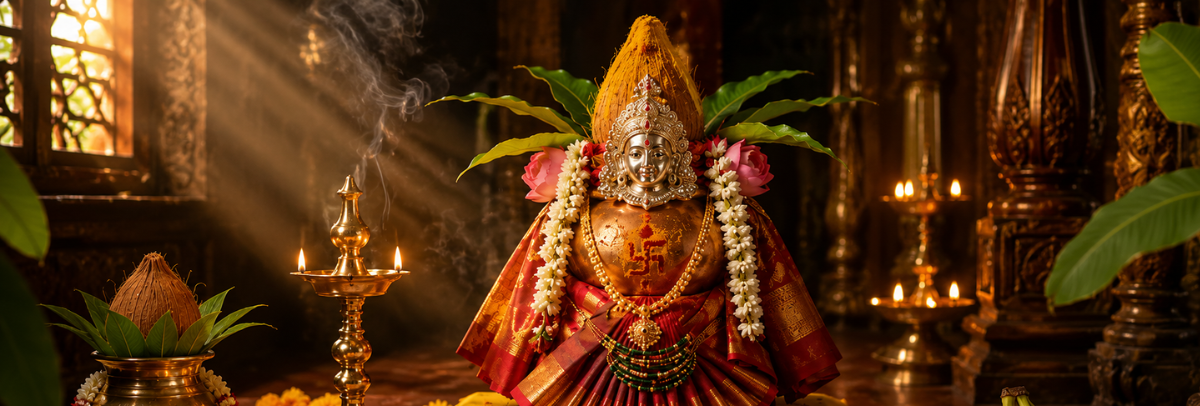
In the days leading up to Narali Purnima, coconuts are cleaned and decorated with flowers, turmeric and kumkum. Some families tie a small piece of cloth or thread around the coconut. On the day itself, the decorated coconut is carried to the shore, often as part of a small family or community procession, and offered to the sea with a short prayer.
The gesture carries a few layers of meaning. On a practical level, it is an offering to Varuna, a request for safe passage and good catches for the boats that will soon head out. On a more symbolic level, breaking or offering a coconut is a familiar act across Hindu ritual life, generally understood as an offering of one's ego or pride, approaching the divine with humility rather than demands.
The coconut itself holds a particular place in this symbolism because of its structure. Its hard outer shell and pure white interior are often read as representing the surrender of something hard and external in exchange for something pure. In the context of Narali Purnima, this takes on an added dimension: the coconut, itself a product of the coastal land, is returned to the sea that sustains the community living beside it.
Narali Purnima Puja Vidhi and Rituals
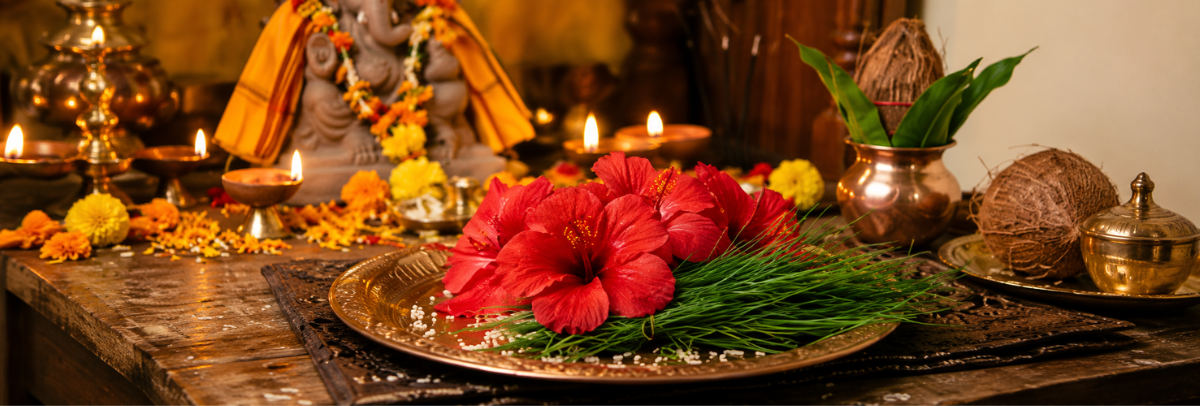
The rituals are not elaborate, and most families keep them fairly simple. A typical sequence looks something like this:
-
Clean the home and set up a small puja area.
-
Decorate the coconut with flowers, turmeric and kumkum.
-
Prepare offerings and traditional sweets for the puja.
-
Offer prayers to Varuna, asking for safety at sea and prosperity for the season ahead.
-
Carry the decorated coconut to the shore.
-
Offer the coconut to the sea with a short prayer.
-
Ask for blessings for a safe and successful fishing season.
-
Share a festive meal with family and, often, with neighbours.
It is worth remembering that these steps vary from household to household and from one coastal settlement to another. Some families keep the ritual private and brief. Others turn it into a larger community gathering at the shore, complete with singing and shared food afterwards.
Narali Purnima Traditions in Maharashtra
While the coconut offering is the religious core of the festival, Narali Purnima in Maharashtra is very much a community event, not something confined to individual homes.
Along stretches of the Konkan coast and in Mumbai's older fishing neighbourhoods, boats are cleaned, repainted and decorated with flags and garlands in the days before the festival. Koli women often wear their traditional nauvari saris for the occasion, and groups gather at the shoreline in the late morning or afternoon, timing their visit around the tithi and the tide.
Folk songs specific to the Koli community, often about the sea, boats and the rhythms of fishing life, are sung at these gatherings, sometimes accompanied by simple dancing. In some areas, small local processions carry decorated coconuts through the lanes before reaching the water. What makes the day stand out is this collective character. It is less a solitary prayer and more a shared marking of the season, performed by people who have grown up with the sea as a constant presence in their lives.
What Do People Eat on Narali Purnima?
Food plays its own role in the celebrations, and coconut again takes centre stage. The signature dish of the day is narali bhat, a sweetened rice preparation made with fresh coconut, jaggery and a touch of cardamom. It is simple to prepare but carries festive significance, often served after the puja is complete.
Alongside narali bhat, many households prepare other coconut-based sweets, from coconut ladoos to variations using jaggery and dry fruit. The idea is straightforward: the same ingredient that is offered to the sea in prayer also finds its way onto the family plate, tying the religious and domestic sides of the day together.
Narali Purnima and Mumbai's Coastal Temples
For anyone hoping to experience Narali Purnima in Mumbai, the festival offers a good opportunity to explore the city's coastal and religious character more broadly. While the coconut offering itself typically happens along fishing shorelines such as Worli Koliwada or other traditional Koli settlements, visitors often combine their visit with a stop at Mumbai's better-known temples.
Siddhivinayak Temple, one of the city's most visited shrines, is not specifically a Narali Purnima site, but many people choose to seek blessings there around the same period, given the temple's significance in Mumbai's religious life. Beyond Siddhivinayak, several smaller shrines dotted along Mumbai's coastal neighbourhoods see increased footfall during the Shravan month generally. Taken together, these visits give travellers a wider sense of how Mumbai's coastal temples and its fishing traditions coexist, even though Narali Purnima itself remains rooted most strongly in the Koli community's shoreline rituals.
Narali Purnima vs Shravan Purnima
It helps to be clear about one thing: Narali Purnima and Shravan Purnima are not exactly interchangeable terms, even though they fall on the same day.
Shravan Purnima is the full moon of the Shravan month and is observed in various forms across India, associated in different regions with festivals such as Raksha Bandhan and other regional observances. Narali Purnima, by contrast, is the name specifically used in Maharashtra's coastal belt for the coconut-offering ritual tied to the fishing community. So while every Narali Purnima is also a Shravan Purnima, not every Shravan Purnima celebration elsewhere in India carries the coastal, coconut-centred meaning that defines this particular day in Maharashtra.
The Cultural Significance of Narali Purnima
Strip away the ritual details and Narali Purnima is really about a relationship, the one between a community and the sea it depends on. The Arabian Sea gives Koli families their livelihood, but it is also unpredictable and, at times, dangerous. The monsoon months make that danger especially real.
Offering a coconut to the sea before the fishing season resumes is a way of acknowledging that uncertainty honestly rather than ignoring it. It is not presented as a guarantee of safety, but as a gesture of respect and trust, made before people put themselves back in the water's hands for another season. That grounded, practical undercurrent is what separates Narali Purnima from festivals built purely around mythology. It stays tied to the working lives of the people who observe it.
Conclusion
Narali Purnima 2026 falls on Friday, 28 August, and for Maharashtra's coastal communities, it remains one of the year's most meaningful days. At its core, it is a festival of Lord Varuna, a traditional marker of the fishing season's return, and a celebration of the culture that has grown up along India's western coastline. It is also, quite simply, a day of coconuts, prayers and shared meals among family and neighbours.
For visitors interested in India's regional festivals, Narali Purnima offers a chance to see a tradition that has not been smoothed over for tourism. It remains a working community's way of marking its own calendar, and understanding it offers a small but genuine window into the lives shaped by India's coastline.