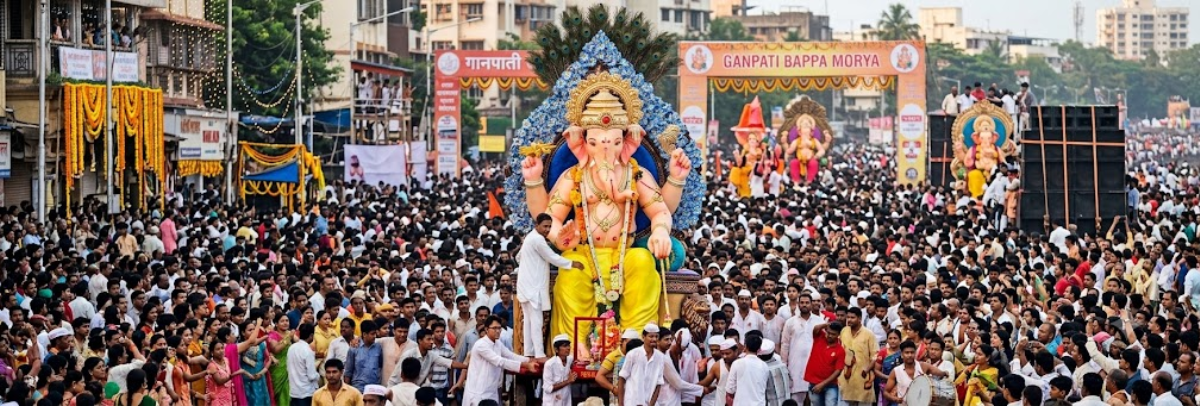
August feels especially festive in many Indian homes. This is where the August 2026 Hindu Festival Calendar becomes genuinely useful. Shravan is already underway, Raksha Bandhan is on the horizon, and there are Ekadashis, teejs and lesser-known vrats tucked in between. Below is a guide to every major festival this month, in order, along with the mythology, the puja vidhi, and the small customs that make each day distinct. Checking the August Panchang 2026 for an auspicious date or sorting out the August Vrat List for your household, this should cover what you need.
August 2026 Hindu Festival Calendar
| Festival / Vrat |
Date |
Day |
Hindu Tithi |
| Kamika Ekadashi |
09-Aug-26 |
Sunday |
Krishna Ekadashi |
| Sawan Shivratri |
11-Aug-26 |
Tuesday |
Krishna Chaturdashi |
| Hariyali Teej |
15-Aug-26 |
Saturday |
Shukla Tritiya |
| Durva Ganapati Vrat |
16-Aug-26 |
Sunday |
Shukla Chaturthi |
| Nag Panchami |
17-Aug-26 |
Monday |
Shukla Panchami |
| Kalki Jayanti |
18-Aug-26 |
Tuesday |
Shukla Shashthi |
| Shravana Putrada Ekadashi |
23-Aug-26 |
Sunday |
Shukla Ekadashi |
| Raksha Bandhan |
28-Aug-26 |
Friday |
Shravana Purnima |
| Narali Purnima |
28-Aug-26 |
Friday |
Purnima |
| Kajari Teej |
31-Aug-26 |
Monday |
Krishna Tritiya |
| Bahula Chaturthi (Bol Choth) |
31-Aug-26 |
Monday |
Krishna Chaturthi |
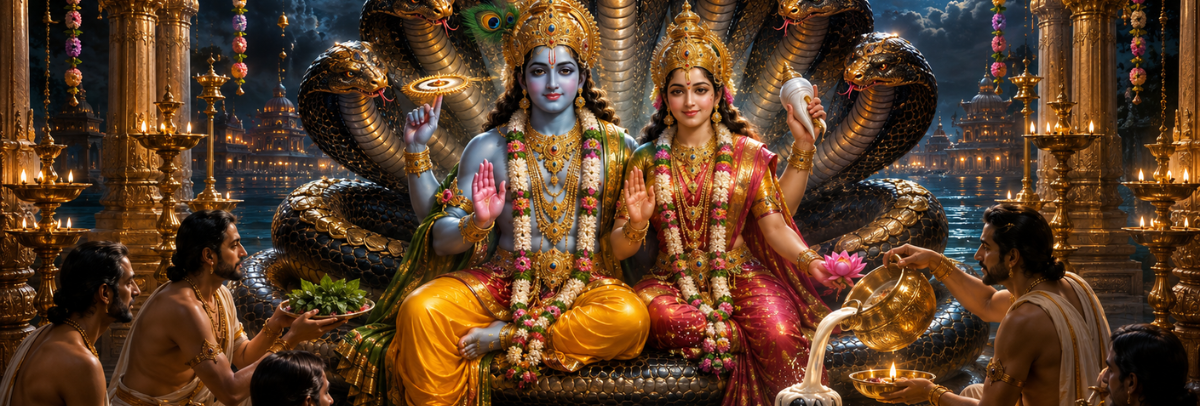
Kamika Ekadashi, Sunday 9 August 2026
Kamika Ekadashi falls in the Krishna Paksha of Shravan and is considered one of the more powerful Ekadashis dedicated to Lord Vishnu. Devotees believe a sincere fast on this day washes away sins accumulated knowingly or unknowingly, which is partly why it draws such devotion among Vaishnavites.
The story comes from the Padma Purana, narrated as a conversation between King Yudhishthira and Sage Narada. Narada tells of a landowning man who, in a moment of rage, kills a Brahmin during a quarrel. Tormented, he wanders seeking penance until sages guide him to observe the Kamika Ekadashi fast. According to the legend, his sin dissolves entirely once he completes the vrat with devotion.
Devotees begin the day with a bath, often in a river if possible, before resolving to fast, some strictly, others permitting fruits and milk. The main worship involves bathing an idol of Vishnu with Panchamrit, offering tulsi leaves, yellow flowers and incense, and listening to the katha in the evening. The fast is broken the next day, Dwadashi, after sunrise, usually with a simple meal shared among family.
Sawan Shivratri, Tuesday 11 August 2026
Every month brings a Shivratri, but the one falling within Shravan carries extra weight for Shiva devotees, coinciding with the Kanwar Yatra season. Long queues outside Shiva temples become common through this month, and Sawan Shivratri is often the busiest of these days.
The story most associated with Shivratri is the Samudra Manthan, the churning of the cosmic ocean by devas and asuras in search of Amrita. Among the things that rose from the ocean was Halahal, a poison so lethal it threatened to destroy all creation. Neither gods nor demons wanted anything to do with it, and in the chaos Shiva stepped forward and drank it to protect the universe. Goddess Parvati, seeing this, is said to have pressed her hand to his throat to stop the poison spreading further. It stayed lodged there, turning his throat blue, which is why Shiva is called Neelkanth, the blue-throated one.
On Sawan Shivratri, devotees perform Jalabhishek, pouring water, milk or Gangajal over the Shivling, sometimes joined by honey, curd and bel patra. Fasting is common through the day, with a night vigil held by devout worshippers chanting the Mahamrityunjaya Mantra or singing bhajans, and Aarti performed at intervals through the night in some temples.

Hariyali Teej, Saturday 15 August 2026
Hariyali Teej, sometimes called Chhoti Teej, arrives with the fresh green of the monsoon still on the trees, and this year coincides with Independence Day. Women shopping for green bangles and green chudidars in the days before is a familiar sight across North India, as green is considered auspicious and symbolic of new growth.
The festival commemorates the reunion of Goddess Parvati and Lord Shiva. According to Hindu tradition, Parvati undertook years of penance, through many lifetimes by some accounts, hoping to win Shiva as her husband. She fasted and endured hardship without wavering, until Shiva, moved by her devotion, finally accepted her. Hariyali Teej marks that union and is treated as a celebration of marital devotion.
Married women observe a fast, sometimes without water, praying for their husbands' wellbeing, while unmarried women observe it hoping for a good match. Henna application is widespread, along with Sinjara, where a married woman's parents send gifts and mehendi in the days before. Swings tied to tree branches, a distinctly monsoon image, are common in villages, with women singing Teej songs as they swing. Puja involves worshipping a decorated idol of Parvati, offering sindoor, bangles and sweets, later distributed as prasad.

Durva Ganapati Vrat, Sunday 16 August 2026
Falling on Shukla Chaturthi, this vrat is dedicated to Lord Ganesha and named after the durva grass that forms the central offering. Fresh durva grass being chosen carefully for Ganesh worship is one of the quieter, less publicised rituals of Shravan, yet devotees consider the offering essential.
According to Hindu belief, durva grass pleases Ganesha more than almost any other offering. A demon named Analasura, whose name meant fire, wreaked havoc breathing flames and swallowing sages whole. The gods approached Ganesha, who consumed the demon to end the threat, but the heat inside him caused unbearable discomfort until sages offered bundles of cool durva grass and his body settled. Since then, durva is considered the offering closest to his heart.
Devotees observe a simple day fast, worship an image of Ganesha with 21 blades of durva grass tied together, and offer modak or laddoo as prasad. The puja is usually brief compared to grander Ganesh festivals, but no less heartfelt.
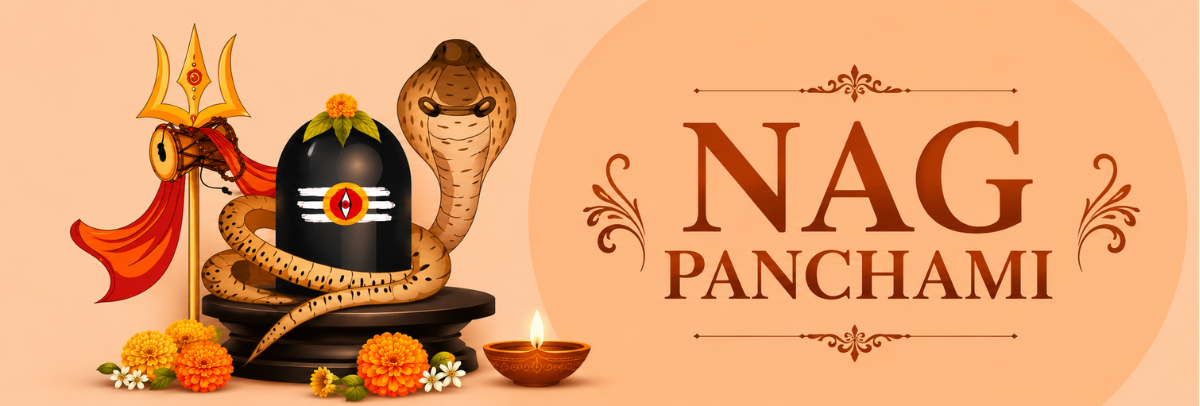
Nag Panchami, Monday, 17 August 2026
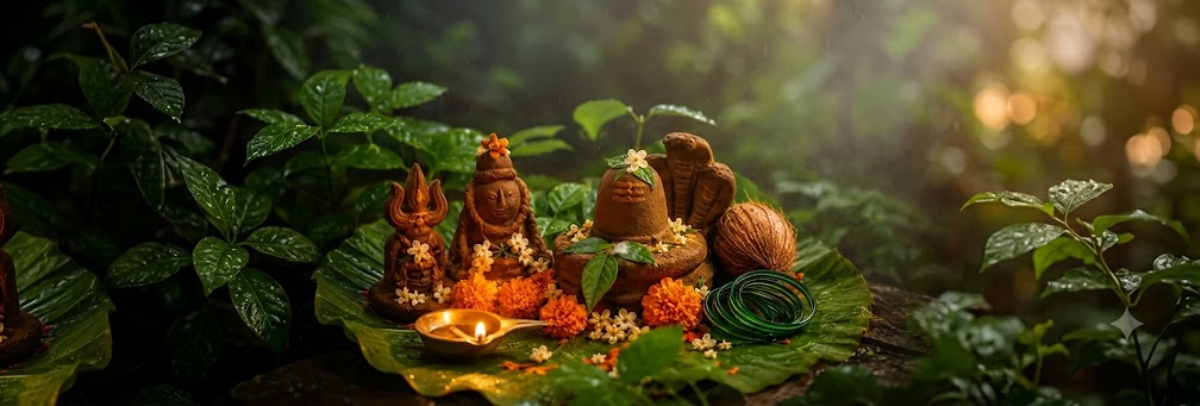
Nag Panchami falls on the fifth day of Shukla Paksha and is dedicated to snake deities, or Nagas, who occupy an important place in Hindu cosmology as guardians of the underworld and, in some traditions, protectors of treasure and rain.
One widely told story involves Krishna as a child in Vrindavan. The river Yamuna had been poisoned by Kaliya, a fierce serpent whose venom made the waters lethal for villagers and cattle. Krishna dived in and danced upon Kaliya's many hoods until the serpent, exhausted, begged for mercy. Krishna spared him on the condition that he leave the Yamuna forever, and Nag Panchami is linked, in some regions, to this act of mercy shown towards a dangerous creature.
Devotees offer milk, turmeric, rice and flowers to snake idols, and in some rural areas live snakes are worshipped by snake charmers, though this is discouraged by wildlife authorities today. Many women instead draw images of snakes on walls near the entrance of the home and offer prayers there. In Maharashtra and parts of Karnataka the day carries particular importance, with fairs in some towns.
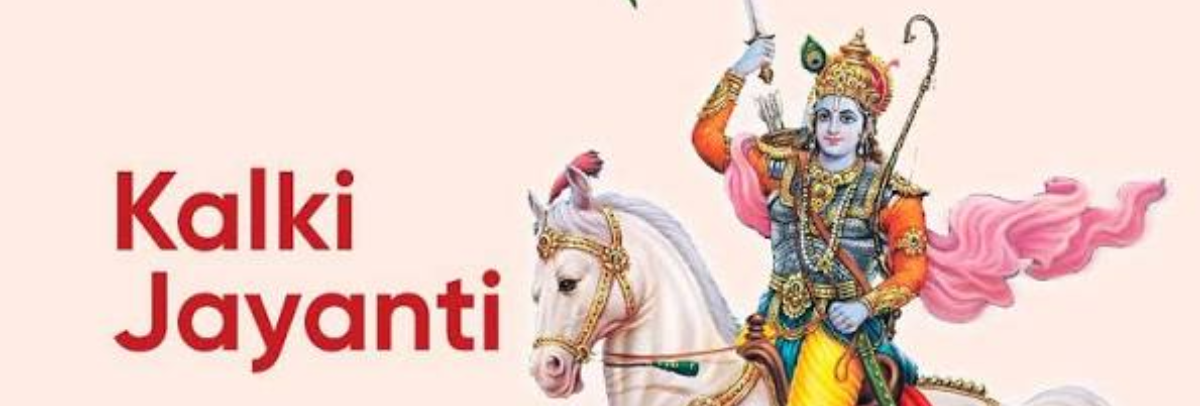
Kalki Jayanti, Tuesday 18 August 2026
Kalki Jayanti falls on Shashthi of Shukla Paksha and is unlike most festivals here, since it does not commemorate something that has already happened. Devotees believe it anticipates something yet to come.
Hindu scriptures describe Kalki as the tenth and final avatar of Vishnu, prophesied to appear at the end of Kali Yuga, the present age, when righteousness has all but disappeared. According to the Puranas, Kalki will be born to a Brahmin named Vishnuyash in a village called Sambhal, arriving on a white horse with a blazing sword, ending unrighteousness and ushering in Satya Yuga. It is told less as memory and more as a promise that decline is never final.
Devotees mark the day with fasting, chanting the Vishnu Sahasranama, and reciting the Kalki Purana where this text is studied. Special abhishekam ceremonies are performed on Vishnu idols in some South Indian temples, and charitable giving, particularly feeding the poor, is encouraged.
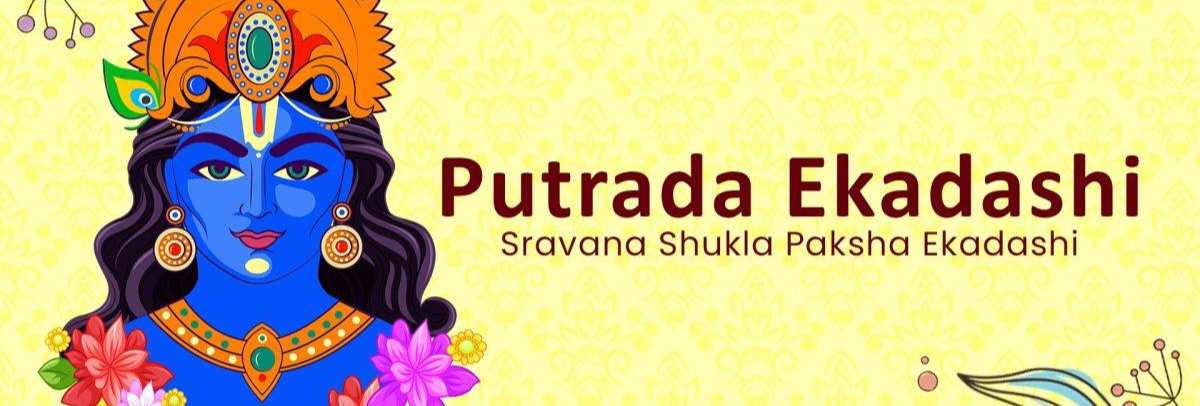
Shravana Putrada Ekadashi, Sunday 23 August 2026
This Ekadashi is named Putrada, meaning one that grants children, and is traditionally observed by couples hoping for a child, though many keep the fast simply for the blessing of Vishnu.
The story speaks of King Mahijit, a ruler troubled by having no heir despite years of good governance. Sages advised him to observe this fast with complete devotion, and through its merit he was eventually blessed with a son, a tale retold each year less as history than as an illustration of the Ekadashi's power.
The rituals resemble other Ekadashi observances: a day fast, worship of Vishnu with tulsi and yellow flowers, and reading the katha in the evening, with some devotees staying awake through part of the night.
Raksha Bandhan, Friday 28 August 2026
Raksha Bandhan needs the least introduction of any festival here, falling this year on Shravan Purnima. Children eagerly waiting for gifts, and sisters carefully tying rakhis while brothers pretend not to get emotional, is a scene repeated in households across the country on this day.
The most commonly told story draws from the Mahabharata. During a battle, Krishna cut his finger, and Draupadi tore a strip of cloth from her sari to bind the wound. Krishna is said to have promised, in that moment, to protect her whenever she needed him, a promise believed to have been honoured years later during her humiliation in the Kaurava court. Another well-known version involves Queen Karnavati of Chittor, who sent a rakhi to Emperor Humayun asking for protection against an invading army, treated by historians as part legend, part documented history.
The ritual is simple. Sisters tie a rakhi on their brother's wrist, apply tilak, and perform a small aarti, after which brothers offer gifts and a promise of protection. Sweets, particularly ghevar in North India, are exchanged. In coastal Maharashtra and Gujarat, the same day is also observed as Narali Purnima.
Narali Purnima, Friday 28 August 2026
For fishing communities along the Konkan and Gujarat coastline, this same Purnima carries a very different meaning. Narali Purnima marks the symbolic end of the monsoon's roughest weeks, and fishermen offer coconuts, or naral, to the sea before resuming their voyages.
Devotees believe the offering appeases the sea god, thanking him for the rains and asking for calmer waters as the fishing season restarts. Boats are decorated and a small puja performed at the shore before the first coconut is thrown into the waves. Families often gather for a communal meal afterwards, and in fishing villages this day can feel as significant as Raksha Bandhan itself, even if it rarely gets the same national attention.
Kajari Teej, Monday, 31 August 2026
Kajari Teej, also called Badi Teej, arrives at the end of the month and closes out the trio of Teej festivals begun by Hariyali Teej. Unlike its greener counterpart earlier in Shravan, this one has a more subdued, monsoon-heavy character, tied to Kajari folk songs sung by women describing longing during the rains.
Devotees believe this Teej also marks the union of Shiva and Parvati, retold here around Goddess Neemdi, a local deity worshipped alongside Parvati in parts of Uttar Pradesh, Rajasthan and Bihar. A small pond-like structure is built using mud and decorated with ghee and jaggery, with a sprig of neem nearby representing the goddess. Women gather in the evening to sing, listen to the katha, and offer Arghya to the moon before breaking their fast. In Bundi, Rajasthan, a well-known procession carries an idol of Parvati through the town, with folk dancers, drummers and decorated elephants drawing visitors from outside the region.
Bahula Chaturthi, Monday, 31 August 2026
Bahula Chaturthi, also known as Bol Choth, falls on the same date and is dedicated to the worship of cows and calves, particularly significant to farming communities and widely observed in Gujarat.
The story concerns a cow named Bahula, who left her calf briefly each day to graze in the forest. One day a lion cornered her, but Bahula pleaded to feed her calf first, promising to return afterwards to be eaten. The lion agreed, and true to her word, Bahula returned once her calf had fed. According to one telling, the lion was Krishna in disguise, testing her devotion, and so moved was he by her honesty that he blessed her, declaring that cows would be worshipped on this day for generations to come.
Devotees avoid milk or dairy on this day, out of respect for the idea that a calf's claim to its mother's milk comes first. Cows and calves are bathed, decorated with tilak and garlands, and fed jaggery and grass, while households cook with millets rather than wheat or dairy. Godhuli puja, performed at dusk when cattle traditionally return home, marks the close of the observance, followed by Arghya to the moon.
The Rhythm of an August Full of Vrats
Looking at these dates together, what stands out is how tightly packed Shravan and the days around it are. Nearly every week carries its own Ekadashi, teej or Vrat, each with its own mood, whether the quiet fast of Durva Ganapati Vrat or the colour of a Bundi procession on Kajari Teej. Families juggling the August Vrat List this year would do well to mark these dates early, particularly with Raksha Bandhan and Narali Purnima falling on the same Friday and Kajari Teej overlapping with Bahula Chaturthi at month's end.
None of this is presented here as historical fact. These are stories carried through generations, some from the Puranas, some from folk memory, and Hindu scriptures themselves frame them as matters of belief rather than chronicle. What remains constant is the way these stories shape how families gather, fast, cook and pray through the month.
Frequently Asked Questions
Q1. Which are the most important festivals in the August 2026 Hindu Festival Calendar?
Ans: Raksha Bandhan on 28 August tends to draw the widest celebration nationally, alongside Hariyali Teej and Nag Panchami, both of which carry strong regional followings across North and West India. Kamika Ekadashi and Shravana Putrada Ekadashi remain significant for devout Vaishnavites throughout the month.
Q2. Where can I find the complete August Panchang 2026?
Ans: Most Panchang details, including tithi timings, Nakshatra and Rahu Kaal, are published by established Panchang websites updated for specific cities, since timings shift slightly by location. It is worth checking a source calibrated to your own city, particularly for fasting start and end times.
Q3. Which fasts are included in the August Vrat List?
Ans: The month's main fasting days are Kamika Ekadashi, Sawan Shivratri, Hariyali Teej, Durva Ganapati Vrat, Shravana Putrada Ekadashi, Kajari Teej and Bahula Chaturthi. Most Sawan Mondays are also observed as fasting days by devout Shiva worshippers, adding further vrats beyond the named festivals.
Q4. Why does Shravan have so many Hindu festivals in August?
Ans: Shravan is considered the holiest month for Shiva devotees, and its overlap with the monsoon has, over centuries, gathered a dense cluster of festivals, some tied to Shiva worship, others to harvest cycles and regional folk deities coinciding with this stretch of the lunar calendar.
Q5. Which festival comes immediately after Raksha Bandhan in August 2026?
Ans: Narali Purnima falls the same day as Raksha Bandhan this year, since both are observed on Shravan Purnima. The next distinct festival is Kajari Teej, observed alongside Bahula Chaturthi on 31 August.