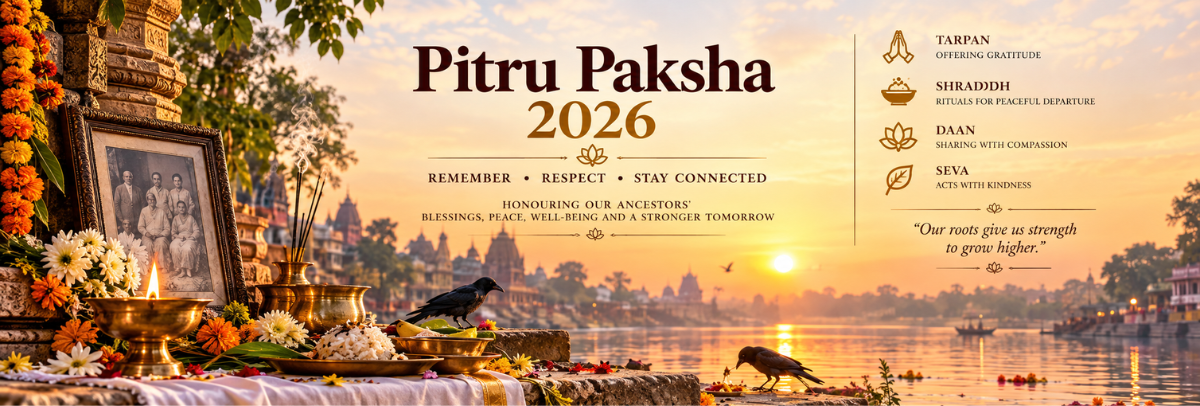
October begins quietly. The first days of the month fall inside Pitru Paksha, the fortnight when many Hindu families remember their ancestors with water offerings, simple meals and a good deal of restraint. Then the mood shifts. Ghatasthapana opens Navratri, the goddess takes over the calendar, and a run of festivals follows through Dussehra, Sharad Purnima and Karwa Chauth. This October 2026 Hindu festival calendar sets out the dates first, then explains what each observance involves.
October 2026 Hindu Festival Calendar: Complete List
| Date |
Festival / Observance |
Significance |
| 6 October |
Indira Ekadashi |
Vishnu worship and prayers for ancestors |
| 10 October |
Sarva Pitru Amavasya |
Conclusion of Pitru Paksha; Shraddha and Tarpan |
| 11 October |
Shardiya Navratri Begins / Ghatasthapana |
Beginning of nine-day Goddess Durga worship |
| 16 October |
Saraswati Avahan |
Invocation of Goddess Saraswati |
| 17 October |
Saraswati Puja / Tula Sankranti |
Saraswati worship during Durga Puja |
| 19 October |
Durga Ashtami & Maha Navami |
Major Navratri and Durga Puja observances |
| 20 October |
Vijayadashami / Dussehra |
Conclusion of Navratri and celebration of victory |
| 22 October |
Papankusha Ekadashi |
Vishnu worship and fasting |
| 25 October |
Sharad Purnima / Kojagara Puja |
Full-moon observance and Lakshmi worship |
| 29 October |
Karwa Chauth |
Traditional fast observed by married women |
Dates for tithi-based observances can shift by a day depending on your city and the Panchang your family follows, so treat this table as a planning guide and confirm local timings before the day.
Indira Ekadashi – 6 October 2026
Indira Ekadashi falls in the Krishna Paksha of Ashwin, the dark fortnight that overlaps with Pitru Paksha. Like other Ekadashis, it is dedicated to Lord Vishnu, and devotees traditionally fast and offer prayers. What sets it apart is its timing. According to tradition, the merit of this vrat can be dedicated to departed ancestors, which is why many families observe it with the Pitru Paksha rites in mind. Fasting styles vary from a full nirjala fast to a fruit-and-milk diet, and families follow what their own practice prescribes.
Sarva Pitru Amavasya – 10 October 2026
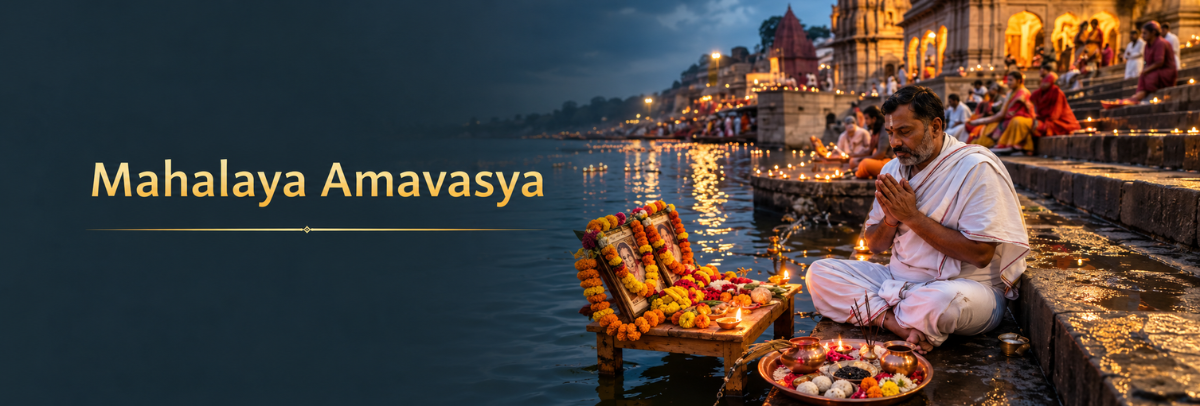
Sarva Pitru Amavasya closes Pitru Paksha. The name means, roughly, the new moon for all ancestors, and it matters most for families who could not perform Shraddha on the specific tithi of a relative's death, or who do not know it. On this day, the rites can be offered for all departed forebears.
The customary practices are Shraddha, a ritual offering often including a meal prepared in the ancestors' memory, and Tarpan, the offering of water (usually with sesame) while reciting names or lineage. Many families also feed Brahmins, cows, crows or the needy. Within Hindu tradition, these rites are believed to bring peace to ancestors and are often linked to concepts such as Pitru Dosha, though families understand and observe them in different ways.
It is also a hinge in the calendar. The following morning belongs to the festive season, and for many households the mood turns from remembrance to preparation almost overnight.
Shardiya Navratri Begins – 11 October 2026
Shardiya Navratri, the autumn Navratri, starts on 11 October with Ghatasthapana, also called Kalash Sthapana. A pot (ghata) is installed in the puja space, filled with water and topped with a coconut and mango leaves. Barley or other grain is sown in soil beside it, and the sprouts that appear over the nine days are watched closely by many families. The installation is done at an auspicious time on the first day, so check your local Panchang for the muhurat.
For nine days, Goddess Durga is worshipped in her different forms, commonly listed as the Navadurga, with a form associated with each day. Devotees may fast, eat only sattvic food, avoid onion and garlic, and attend evening aartis. Devotional singing runs through it all: bhajans and jagrans in the north, garba and dandiya in Gujarat, and elaborate pandals in Bengal and across eastern India.
Practice differs quite a bit by region. In much of north India, Navratri is a nine-day fast that ends with Kanya Pujan. In Gujarat, the evenings belong to garba. In the south, many homes set up Golu, a tiered display of dolls. In Bengal, the celebration centres on Durga Puja, which builds towards the final four days. No single description covers all of it, and your family's tradition is the one that counts.
| Date |
Navratri Observance |
| 11 October |
Navratri begins / Ghatasthapana |
| 16 October |
Saraswati Avahan |
| 17 October |
Saraswati Puja |
| 19 October |
Durga Ashtami & Maha Navami |
| 20 October |
Vijayadashami / Dussehra |
Saraswati Avahan & Saraswati Puja – 16–17 October 2026
Within the Navratri and Durga Puja period, Goddess Saraswati has her own place. Saraswati Avahan, the invocation, is on 16 October, and Saraswati Puja follows on 17 October. Saraswati is associated with knowledge, learning, music and the arts, and this is most visible in traditions around Durga Puja, where books, pens and musical instruments are often set before the goddess and left undisturbed for the day. Students and artists tend to take particular interest in it. The same day is also marked as Tula Sankranti, when the sun enters Libra.
Durga Ashtami, Maha Navami & Vijayadashami – 19–20 October 2026
Durga Ashtami & Maha Navami – 19 October
The story of Navratri gathers pace here. Ashtami and Navami are among its most important days, and the calendar places both on 19 October. In many homes, Ashtami is the day of Kanya Pujan, when young girls are welcomed, fed and honoured as forms of the goddess. In Bengal, the Sandhi Puja, held at the junction of Ashtami and Navami, is a highlight, and the pandals are at their busiest. Navami is often marked with a havan and a final round of worship. The exact timings differ by tithi and location, so check your local Panchang.
Vijayadashami / Dussehra – 20 October
Vijayadashami, or Dussehra, on 20 October closes the nine days. The story most people know is Rama's victory over Ravana, retold night after night in Ram Leela performances, and ending with towering effigies of Ravana, Kumbhakarna and Meghnad set alight across north India. Elsewhere, the emphasis differs: Durga's victory over the buffalo demon Mahishasura is central in Bengal and much of eastern India.
Calling it a simple contest of good against evil misses how the festival is actually lived. It is also a day for beginnings. In parts of the south and west, people start new ventures, and tools, vehicles and books are worshipped in Ayudha Puja traditions. In Bengal, the festival ends with sindoor khela and the immersion of the idols. In Mysuru and Kullu, Dussehra is a public spectacle with processions that have their own long history.
Papankusha Ekadashi – 22 October 2026
Two days after Dussehra comes Papankusha Ekadashi on 22 October, the second Ekadashi of the month. It is dedicated to Lord Vishnu, and the tradition is to fast, pray and keep a quieter day after the noise of the festival. Like other Ekadashis, it is observed according to family custom, from a strict fast to a light, grain-free diet. It is a short, practical observance and sits comfortably in the lull before the full moon.
Sharad Purnima & Kojagara Puja – 25 October 2026
The full moon of the Sharad season is Sharad Purnima, and it is regarded as one of the brightest moons of the year. The night is also called Kojagara Puja, especially in Bengal, Odisha and Assam, when Goddess Lakshmi is worshipped. The name is usually explained through the phrase "who is awake?", which refers to a tradition that Lakshmi visits those who stay up through the night.
Night-time worship is central: lamps are lit, Lakshmi is invoked, and many families stay awake with songs, games or conversation. In much of north and west India, a well-known custom is to prepare kheer, leave it out under the moonlight and eat it afterwards, in the belief that the moonbeams give it special properties. In Gujarat, the night is known for its garba gatherings, and in Vrindavan it is connected to Krishna's Raas Leela. These are traditions and beliefs rather than guarantees, and how a household marks the night varies widely.
Karwa Chauth – 29 October 2026
Karwa Chauth is a fast observed traditionally by married women, especially in north India, who pray for the long life and well-being of their husbands. The day usually starts before sunrise with sargi, a pre-dawn meal often sent by the mother-in-law. After that, the fast is kept through the day, and in many families without even water.
In the evening, women dress up, apply mehendi and gather to hear the Karwa Chauth katha. The fast is broken once the moon rises, often after looking at it through a sieve and then at the husband, who offers the first sip of water. It varies a great deal. Some families keep a nirjala fast, others a fruit-based one, and some couples fast together. It is not universal or mandatory, and many women observe it in ways that suit their family and health. The moonrise time is city-specific, so check the local timing.
October 2026 Vrat & Puja Dates at a Glance
| Date |
Vrat / Puja |
Main Deity / Focus |
| 6 October |
Indira Ekadashi |
Lord Vishnu / ancestors |
| 10 October |
Sarva Pitru Amavasya |
Ancestor remembrance |
| 11 October |
Ghatasthapana |
Goddess Durga |
| 16 October |
Saraswati Avahan |
Goddess Saraswati |
| 17 October |
Saraswati Puja |
Goddess Saraswati |
| 19 October |
Durga Ashtami / Maha Navami |
Goddess Durga |
| 22 October |
Papankusha Ekadashi |
Lord Vishnu |
| 25 October |
Sharad Purnima / Kojagara Puja |
Goddess Lakshmi |
| 29 October |
Karwa Chauth |
Marital well-being / traditional vrat |
What Makes October 2026 Significant in the Hindu Calendar?
Look at the month as a sequence and it has a shape. It opens inward, with Indira Ekadashi and the ancestor rites of Pitru Paksha, when the emphasis is on memory, gratitude and obligation to those who came before. Sarva Pitru Amavasya draws that to a close on 10 October, and the very next day the tone turns outward.
Navratri brings the goddess into homes and neighbourhoods, first as Durga, then in Saraswati's place among books and instruments, and finally in the intensity of Ashtami and Navami. Dussehra releases all that energy in a single day of processions, effigies and immersions. Papankusha Ekadashi then slows things down again with a Vishnu fast. Sharad Purnima brings a moonlit night of Lakshmi worship, and Karwa Chauth closes the month with a vrat built around family and the evening moon.
The rhythm is a familiar one in the Hindu year, going from restraint to celebration, then to quiet, then to celebration again. That may be why October feels so full to those who keep the calendar.
October 2026 Hindu Festival Calendar: Planning Your Observances
- Mark the dates you observe in advance, particularly vrats that need preparation, such as Karwa Chauth or the Navratri fasts.
- Check a local Panchang for tithi-sensitive rituals, since a tithi can begin or end at different hours in different cities.
- Confirm puja muhurats for your city or location, including Ghatasthapana, Sandhi Puja and moonrise.
- Keep in mind that regional calendars can produce a difference of a day in some observances.
- If you are fasting, follow the practice your family or tradition prescribes rather than assuming one method suits everyone.
Conclusion
October begins with remembrance, as families offer water and prayers to their ancestors. It moves through the energy of Navratri and Dussehra, pauses for Ekadashi, and ends beneath the full moon of Sharad Purnima and the Karwa Chauth moonrise. Use this October 2026 Hindu festival calendar as a planning reference, and check your local Panchang for exact tithi and muhurat details before each observance.
FAQs
Q1. What are the major Hindu festivals in October 2026?
Ans. The main ones are Sarva Pitru Amavasya (10 October), Shardiya Navratri (from 11 October), Durga Ashtami and Maha Navami (19 October), Dussehra (20 October), Sharad Purnima (25 October) and Karwa Chauth (29 October). Indira Ekadashi (6 October) and Papankusha Ekadashi (22 October) are the month's Vishnu fasts.
Q2. When does Navratri begin in October 2026?
Ans. Shardiya Navratri begins on 11 October 2026 with Ghatasthapana. The nine days end with Vijayadashami on 20 October.
Q3. When is Dussehra in 2026?
Ans. Dussehra, or Vijayadashami, falls on 20 October 2026, the day Navratri concludes.
Q4. When is Sharad Purnima in 2026?
Ans. Sharad Purnima is on 25 October 2026, and Kojagara Puja, the Lakshmi worship, is observed the same night.
Q5. When is Karwa Chauth in 2026?
Ans. Karwa Chauth falls on 29 October 2026. The fast is broken after moonrise, which varies by city, so check local timings.