Mahalaya Amavasya 2026 Date, Tarpan Time, Rituals & Significance

Dheeraj Khandelwal
calender October 6, 2026

By the last day of Pitru Paksha, the household has usually settled into a rhythm. Copper vessels are set out, sesame seeds sit in a small bowl, and someone has already worked out which relative is remembered on which day. Mahalaya Amavasya 2026 closes that fortnight of remembrance on Saturday, 10 October. It is the day for those whose ancestors are remembered collectively, and for families who missed an earlier date. Once it passes, the mood shifts towards the festive season.


When Is Mahalaya Amavasya in 2026?


Mahalaya Amavasya falls on Saturday, 10 October 2026, the concluding day of Pitru Paksha. Calendars also list it as Sarva Pitru Amavasya or Sarvapitri Moksha Amavasya, names that point to its role as the day for all ancestors together.


Detail Date / Time
Mahalaya Amavasya 2026 Saturday, 10 October 2026
Amavasya Tithi Begins 9:35 PM, 9 October
Amavasya Tithi Ends 9:19 PM, 10 October
Kutup Muhurat 11:45 AM–12:31 PM
Rohina Muhurat 12:31 PM–1:18 PM
Aparahna Kaal 1:18 PM–3:37 PM


Two different things appear in that table. The tithi is the span of the lunar day, which begins the previous evening. The muhurats are the daytime windows traditionally used for the rites themselves. These are the supplied timings, and Panchang calculations can shift with location, so check a local Panchang before fixing the hour of your Shraddha or Tarpan.


What Is Mahalaya Amavasya?


Pitru Paksha is the fortnight in which Hindu families traditionally remember their forebears, usually on the tithi of each person's death. Mahalaya Amavasya is where that cycle ends. "Sarva Pitru" means all ancestors, and the day works as a collective remembrance.


It matters most in a few situations. An ancestor's exact death tithi may be unknown. A rite may have been missed during the fortnight, perhaps because of travel, illness or circumstance. Or a family may simply want to honour the wider lineage in one act. Many households therefore treat it as the day that gathers up whatever the previous fifteen days left undone, with prayers and food and water offerings meant for the whole ancestral line.


Some sources describe it as an especially potent day for ancestral rites. That is a traditional belief, and many families observe it out of love and duty without any such claim.


Mahalaya Tarpan Time 2026


For many readers, the Mahalaya Tarpan time is the main question. Pitru Tarpan is the offering of water, with sesame and Kusha grass, to the departed. Ancestral rites are traditionally kept for the daytime, not the early morning or evening, which is why the midday windows matter.


Muhurat / Kaal Time
Kutup Muhurat 11:45 AM–12:31 PM
Rohina Muhurat 12:31 PM–1:18 PM
Aparahna Kaal 1:18 PM–3:37 PM


The broader Aparahna period, roughly the afternoon stretch of the day, is the one traditionally associated with Shraddha. Kutup and Rohina are shorter windows within the midday span that many families prefer for Tarpan. If your household follows a particular priest or lineage, their guidance on timing comes first. Again, confirm the times against your local Panchang.


Mahalaya Amavasya Rituals: Tarpan, Shraddha & Pind Daan


Practice differs from region to region and family to family, so treat what follows as a description of common elements, not a fixed checklist.


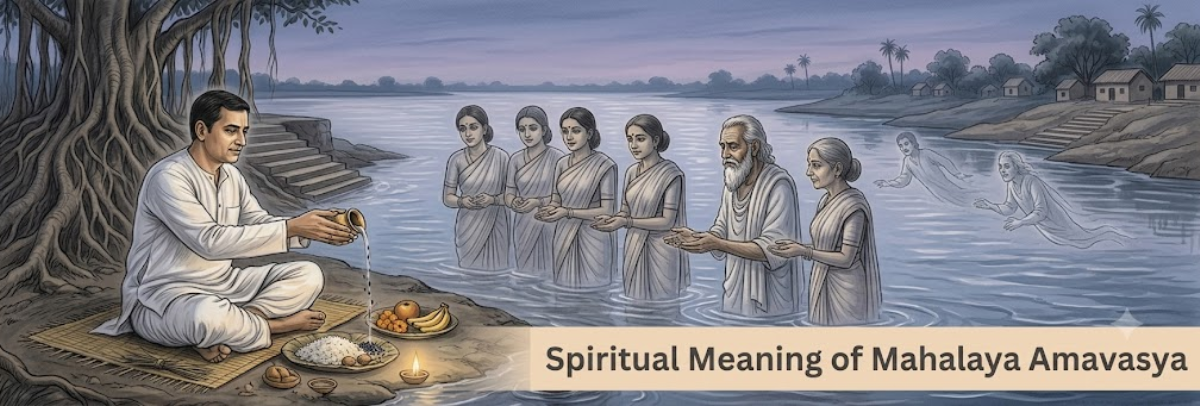
  • Pitru Tarpan: Water mixed with black sesame (til) is offered with Kusha grass, generally while facing south, the direction traditionally linked with the ancestors. Some families go to a sacred river to do this. Others perform it at home, as their own custom dictates.
     
  • Shraddha: The word carries the sense of faith and sincerity. In practice it means offering food and prayers to the ancestors, and the remembering matters as much as the offering. Names are recalled, stories are often told, and the younger generation learns who came before them.
     
  • Pind Daan:  This is the offering of food, traditionally shaped into balls, for the departed. It is especially associated with observances dedicated to ancestors as a group. Not every family performs it, and those who do may follow quite different procedures.
     

How to Perform Pitru Tarpan at Home


Not everyone can travel to a river ghat or a pilgrimage town. Many people perform Tarpan at home, and the elements are simple:


  1. Clean the space and set up a modest area for the ritual.
  2. Keep water, black sesame seeds and Kusha grass ready.
  3. Take a respectful Sankalp, a stated intention, for the ancestors being remembered.
  4. Offer water with sesame and Kusha, traditionally facing south, as your family tradition prescribes.
  5. Offer prayers and remember the departed, by name where that is customary.
  6. Finish with charity, a food offering or whatever your household usually does.


The words spoken and the order of steps differ between communities. If your family follows a particular priestly, regional or community tradition, follow those instructions, or ask an elder or your family priest. They will know the version your household has always used.


Charity and Daan on Mahalaya Amavasya


Giving is woven into the day. Traditional practices associated with the observance include:


  • Feeding crows, cows and dogs
  • Offering cooked food
  • Donating clothes
  • Giving grains or food to priests or people in need


Crows hold a particular place in Pitru Paksha custom, and many households set aside a portion of the meal for them before anyone eats. None of this is mandatory for everyone. These are customs families take up according to their means and tradition, and a small, sincere gesture is as valid as an elaborate one.


What Is Pitra Visarjan?


As the fortnight ends, the ancestors are traditionally bidden farewell, and this is the idea behind Pitra Visarjan. In many homes the day closes in the evening with a ghee lamp lit near a Peepal tree, a quiet gesture of seeing the ancestors off.

Customs vary. Some families do this at home and some at a temple. Others have no such practice at all. Where it is observed, it marks the point where Pitru Paksha ends and the household turns towards the festive weeks ahead.


Significance of Mahalaya Amavasya During Pitru Paksha


Sarva Pitru Amavasya is traditionally understood as a chance to remember all ancestors: those whose death dates are unknown, those whose Shraddha could not be performed on their own tithi, and the many members of a lineage who are remembered together and not one by one.

Within Hindu tradition, these rites are associated with ancestral blessings, the peace or liberation of departed souls, and spiritual merit. These are religious beliefs and traditional interpretations, held with sincerity by many, and not claims that can be tested. The tradition does not, in its gentler and more widely practised forms, treat the day as a source of dread. It is about gratitude and continuity, and it deserves to be approached in that spirit, not out of fear of misfortune for missing a rite.


Mahalaya Amavasya and the Beginning of Devi Paksha


In West Bengal and some other eastern traditions, Mahalaya has another layer of meaning. It marks the transition from Pitru Paksha to Devi Paksha, the period leading into the Durga Puja season. Households in Bengal often make Tarpan offerings, frequently at river banks, and then look towards the arrival of the goddess.


For many Bengali families the day is also tied to the dawn recitation of the Mahishasuramardini, a long-standing radio tradition that signals the start of the festive mood. Artisans, too, traditionally associate the day with the final touches to the goddess's idol.


The emotional movement is a gentle one: ancestral remembrance, then farewell to Pitru Paksha, then the arrival of the festive season. This is a regional emphasis, not a universal one. Mahalaya Amavasya is not itself Durga Puja, and the transition is not observed in the same way across India.


Mahalaya Amavasya 2026: Quick Guide


What to Know Details
Date 10 October 2026
Day Saturday
Also Known As Sarva Pitru Amavasya
Tithi Begins 9:35 PM, 9 October
Tithi Ends 9:19 PM, 10 October
Kutup Muhurat 11:45 AM–12:31 PM
Rohina Muhurat 12:31 PM–1:18 PM
Aparahna Kaal 1:18 PM–3:37 PM
Main Focus Ancestor remembrance, Tarpan & Shraddha
Pitru Paksha Final day


Mahalaya Amavasya vs Sarva Pitru Amavasya


In the context of this article, Mahalaya Amavasya and Sarva Pitru Amavasya refer to the same concluding Amavasya of Pitru Paksha. Different calendars simply prefer different names.


"Mahalaya" also has a distinct cultural meaning in Bengal, where it points to the beginning of Devi Paksha and the countdown to Durga Puja. If you are searching a calendar and find one term and not the other, this overlap is usually the reason.


Conclusion


Mahalaya Amavasya is traditionally a time to pause and remember those who came before, to offer Tarpan and Shraddha, and to formally bring Pitru Paksha to a close. Whether it is kept with a full ritual at a river or with a small offering of water at home, the underlying gesture is the same.


For families in Bengal and parts of the east, the day also opens a door. The quiet of ancestral remembrance gives way to Devi Paksha, and the festive season begins.


FAQs


Q1. When is Mahalaya Amavasya in 2026?
Ans. Mahalaya Amavasya 2026 falls on Saturday, 10 October. The Amavasya tithi begins at 9:35 PM on 9 October and ends at 9:19 PM on 10 October.


Q2. What is the Tarpan time for Mahalaya Amavasya 2026?
Ans. The Kutup Muhurat is 11:45 AM–12:31 PM and the Rohina Muhurat is 12:31 PM–1:18 PM. The Aparahna Kaal runs from 1:18 PM to 3:37 PM. Check a local Panchang, as timings can vary by location.


Q3. What rituals are performed on Mahalaya Amavasya?
Ans. Common practices include Pitru Tarpan, Shraddha and, in some families, Pind Daan. Charity such as feeding crows, cows and dogs, donating clothes, and giving food or grains is also traditional. Practices differ by family and region.


Q4. Can Pitru Tarpan be performed at home on Mahalaya Amavasya?
Ans. Yes. Many families perform Tarpan at home with water, black sesame and Kusha grass, traditionally facing south. Follow your own family, priestly or community tradition where it differs.


Q5. What is the significance of Sarva Pitru Amavasya?
Ans. It is traditionally the day to remember all ancestors, especially those whose death dates are unknown or whose rites could not be performed earlier. Beliefs about blessings and spiritual merit are religious interpretations and vary between traditions.

You Might Also Be Interested In This