Pithori Amavasya 2026: Date, Puja Vidhi, Significance and Regional Traditions

Dheeraj Khandelwal
calender September 7, 2026

An Amavasya day in the monsoon has a certain hush to it. The sky stays low and grey through the afternoon, and somewhere in that quiet a mother lights a lamp and prays for nothing more than her children's safety. That's really the heart of Pithori Amavasya, a festival that doesn't get the attention of the bigger Hindu observances, yet is held onto with real devotion in homes across the country.


The day is tied to Goddess Durga and the 64 Yoginis, worshipped through small figures shaped from flour, and it falls on Amavasya, the no-moon night long associated with remembering ancestors. It also arrives just as farming communities mark gratitude towards the land and their cattle. Depending on where you are in India, the day can look completely different: a fasting mother in one home, a garlanded bullock led through the village in another.


Here's when it falls in 2026.


Pithori Amavasya 2026: Date & Timings


Pithori Amavasya falls on Thursday, 10 September 2026. Because the Amavasya tithi runs across two days this year, some rituals are observed on the Thursday evening and others the following sunrise.


Event Date & Time
 Pithori Amavasya  Thursday, 10 September 2026
 Amavasya Tithi Begins  10 September 2026, 10:33 AM
 Amavasya Tithi Ends  11 September 2026, 8:56 AM
 Pithori Vrat & Evening Puja  10 September, during Pradosh Kaal
 Snan-Daan & Kusha Grass Collection  11 September, at sunrise


The tithi begins mid-morning on Thursday and runs until nearly 9 AM on Friday, so the vrat and evening puja happen on 10 September, while the sunrise rituals fall on 11 September. It's a fairly ordinary quirk of the lunar calendar.


What is Pithori Amavasya?


Pithori Amavasya falls in the Bhadrapada month and is best known as the day mothers fast and pray for their children's wellbeing. According to tradition, the vrat is dedicated to the 64 Yoginis, seen as attendants or manifestations of the divine feminine, alongside Goddess Durga.


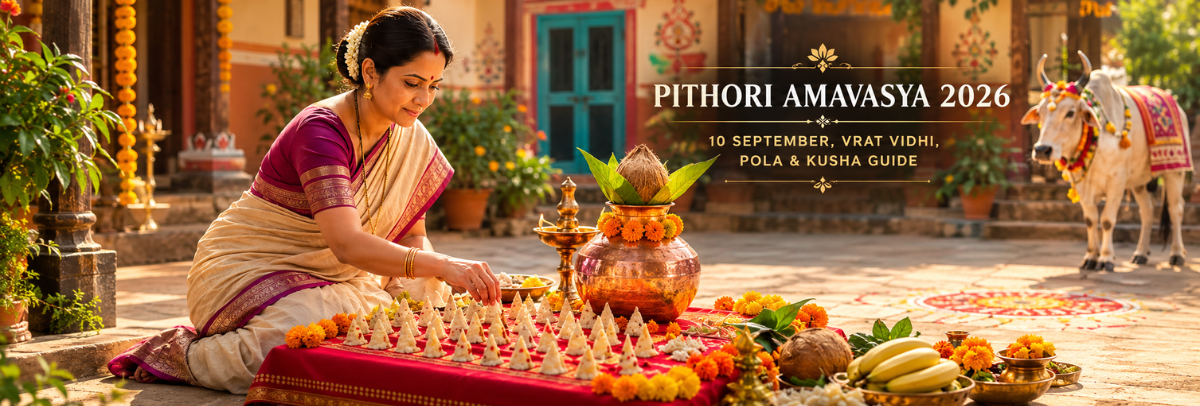
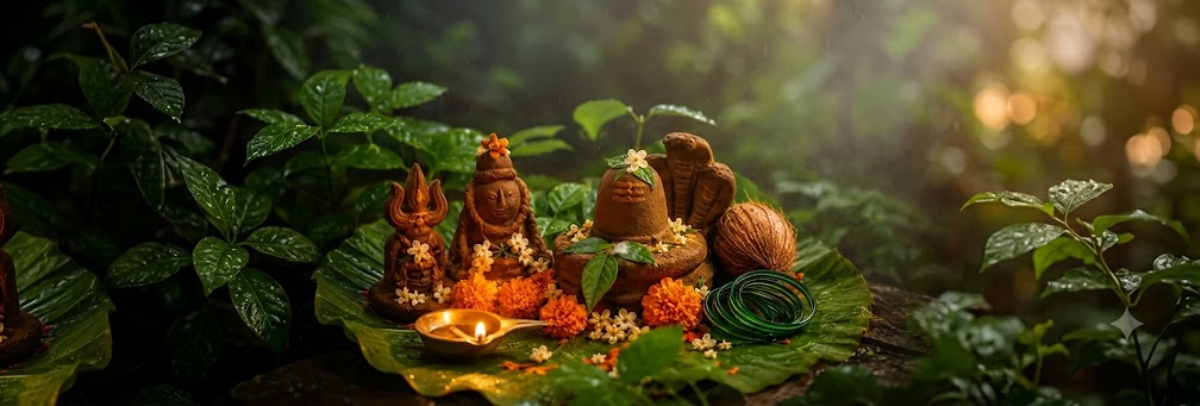
What makes this Amavasya distinctive is the flour. Devotees traditionally shape small figures, or pithas, out of wheat or rice flour to represent the goddesses, and it's from this practice that the festival gets its name.


There's also a quieter significance to the timing. This Amavasya falls right before Pitru Paksha, the fortnight devoted to ancestors, so many families treat it as an early opportunity for remembrance, ahead of the formal Shraddha rituals to come.


Why is Pithori Amavasya Celebrated?


  1. Protection of children. At its core this is a mother's vrat. She fasts through the day and breaks it only after the evening puja, praying for her children's health and long life throughout. It's a personal, domestic kind of devotion rather than a grand public ritual.
     
  2. Worship of the 64 Yoginis. The 64 Yoginis are broadly understood as powerful female deities within the wider tradition of Shakti worship. Their exact identities shift across regional sources, and rather than being worshipped individually, they're honoured together, usually through the flour figures placed on the altar.
     
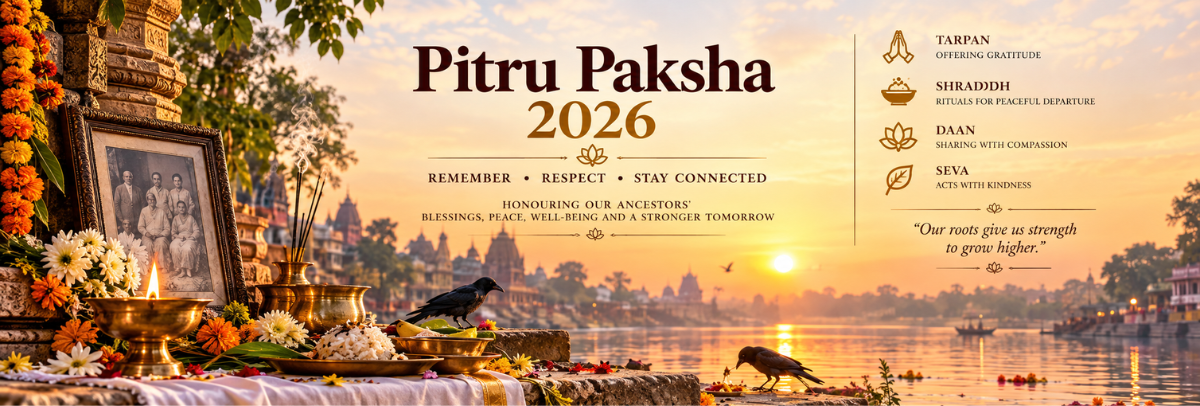
  3. Ancestor worship. Amavasya in general is considered fitting for remembering ancestors, and this one is no different. Falling just before Pitru Paksha, many households use the day to perform Tarpan, offering water to ancestors as a gentle lead-in to the fortnight ahead.
     
  4. Kusha grass. This day is also called Kushotpatini Amavasya. Kusha grass, considered sacred, is traditionally gathered now for use in Shraddha ceremonies and other rites through the year, almost a practical errand tucked inside a spiritual one.


Pithori Amavasya Vrat Katha


There once lived a Brahmin woman blessed with eight sons. She raised them with the kind of devotion only a mother knows, and for years her home was full of the noise eight boys naturally bring. Then, one by one, her sons began to die, until she was left alone in a house that had once overflowed with life.


Unable to bear the silence, she is said to have gone to her mother's home. There, while going about the daily chores, she came across her mother and the other women performing a vrat dedicated to the 64 Yoginis and Goddess Durga. Something about it moved her, and she asked what it was. She was told it was believed to protect children and, in certain circumstances, restore what had been lost.


With little left to lose, she took up the vrat herself, fasting through the day, shaping the flour figures with her own hands, and praying through the night with a devotion born of pure desperation. According to the legend, her sons were restored to her, brought back to life through divine grace.


From that day, the vrat became bound up with mothers praying for their children's protection, passed down as the legend behind Pithori Amavasya. Read as history or as parable, it explains why the observance is still carried out with such quiet intensity today.


Pithori Amavasya Puja Vidhi


The broad shape of the puja tends to follow a familiar pattern, though the specifics vary by family.


  1. Clean the home, especially the puja area.
     
  2. Set up a wooden plank, or a clean thali or chalani, as the altar.
     
  3. Traditionally prepare 64 small figures or mounds from wheat or rice flour to represent the Yoginis.
     
  4. Arrange and decorate them alongside a representation of Goddess Durga.
     
  5. Offer water, flowers, turmeric, kumkum, incense and sweets.
     
  6. Worship the 64 Yoginis and Goddess Durga according to family custom.
     
  7. Observe the vrat through the day, breaking the fast after the evening rituals.
     
  8. Read or listen to the Vrat Katha during the evening worship.
     
  9. Perform aarti and pray for the wellbeing of children and family.
     
  10. Where it is local custom, disperse the flour figures beneath a sacred tree or near a Tulsi plant the next day.


Exact rituals and offerings differ from one community to another, and there's no single correct way to go about it.


Kushotpatini Amavasya: The Kusha Grass Connection


Kusha grass is a sharp-bladed grass considered sacred in Hindu ritual, believed to carry purifying properties that make it suitable for puja, yajnas and, most notably, Shraddha and Tarpan rites for ancestors. Because this Amavasya is considered particularly auspicious for gathering it, the day is also known as Kushotpatini Amavasya. Families traditionally collect fresh Kusha grass now and store it for use through the year, especially during Pitru Paksha soon after.


Regional Traditions


  1. Maharashtra: Pola festival. Here, the same Amavasya is celebrated as Pola, centred on farmers and cattle rather than mothers and children. During Pola festival 2026, farmers bathe their bullocks, decorate them with colour and ornaments, and lead them through the village in a procession, thanking them for their role in the fields. Some traditions link this to Vrishabhotsava, a wider celebration of the bull as a symbol of agrarian strength. The mood is communal and festive, quite unlike the quieter worship seen elsewhere.
     
  2. Hindi-speaking regions. Here the day stays closer to its familiar form: mothers fasting, flour figures shaped and worshipped, the evening built around the Vrat Katha and prayers for children.
     
  3. Southern and eastern India. In several traditions here, the emphasis leans more towards holy baths, Daan and ancestor worship through Tarpan, with the flour-figure ritual less prominent.


The lunar date is shared, but what it means, and how it's marked, genuinely changes from one region to the next.


Pithori Amavasya vs Pola: Are They the Same?


Aspect Pithori Amavasya Pola Festival
 Main focus  Mothers and children's wellbeing  Cattle and agricultural life
 Key worship  64 Yoginis and Goddess Durga  Bullocks and cattle
 Main tradition  Vrat and flour figures  Decorating and worshipping cattle
 Strong regional association  Hindi-speaking regions  Maharashtra and central India


They can fall on the same date, but they aren't the same festival. One grew from a mother's devotion, the other from a farmer's gratitude.


Pithori Amavasya 2026: Quick Guide


Detail Information
 Festival  Pithori Amavasya
 Date  10 September 2026
 Day  Thursday
 Amavasya Begins  10 September, 10:33 AM
 Amavasya Ends  11 September, 8:56 AM
 Main Puja  Evening, Pradosh Kaal
 Main Deities  Goddess Durga and the 64 Yoginis
 Main Observance  Pithori Vrat
 Related Tradition  Kushotpatini Amavasya
 Regional Festival  Pola


Significance of Pithori Amavasya


Pull the threads together and Pithori Amavasya is really several observances sharing a single day: a mother's private fast rooted in the story of a woman who refused to accept the loss of her sons, the collective worship of the 64 Yoginis, a quiet nod towards ancestors just before Pitru Paksha, and, in Maharashtra, an entirely separate gratitude directed at the bullocks that till the fields.


That range is probably why the day has lasted. It doesn't ask for one kind of devotion, it makes room for a mother's private prayer, a farmer's public celebration, and a family's remembrance of those who came before, all inside the same lunar night, without ever needing to look the same twice.


FAQs


Q1. When is Pithori Amavasya in 2026?

Ans. Thursday, 10 September 2026, with the Amavasya tithi continuing until 8:56 AM on 11 September.


Q2. Why do mothers observe the Pithori Amavasya vrat?

Ans. To pray for their children's health, safety and long life, a practice rooted in the story of the Brahmini and her eight sons.


Q3. What is the story behind Pithori Amavasya?

Ans. It tells of a Brahmin woman who lost her eight sons and, after observing the vrat with great devotion, is believed to have had them restored to her through divine grace.


Q4. What is the significance of the 64 Yoginis?

Ans. They are traditionally seen as manifestations of the divine feminine, worshipped together on this day, often through flour figures, alongside Goddess Durga.


Q5. Is Pithori Amavasya the same as the Pola festival?

Ans. No. They can fall on the same date, but Pithori Amavasya centres on mothers and children, while Pola, celebrated mainly in Maharashtra, honours cattle and agricultural life.

You Might Also Be Interested In This