Nag Panchami 2026: Date, Puja Vidhi, Story, Do's and Don'ts

Dheeraj Khandelwal
calender August 5, 2026

During the monsoon, the earth feels different. Fields soften after the rain, anthills rise unnoticed in courtyards and back gardens, and conversations at home slowly turn towards old stories about serpents and their place in our world. It's one of those quiet seasonal shifts that many of us barely register until someone's grandmother mentions it while sorting through flowers for the puja tray. This is the season Nag Panchami 2026 arrives in, and it brings with it a reminder that reverence for nature has never really left Indian spiritual life, it just waits for the right week to resurface.


What is Nag Panchami?


Nag Panchami falls in the Hindu month of Shravan, a time already dedicated to Lord Shiva through Sawan Somwar fasts. Serpent worship on this day isn't a side ritual tacked onto the monsoon calendar; it's tied directly to Shiva, who is so often depicted with a snake coiled around his neck. For many families, that connection is what makes the festival feel less like an isolated event and more like a continuation of the month's devotion. Snakes, in this context, aren't feared creatures but protectors, symbols of fertility, and reminders that humans share the earth with beings we don't always understand.


Nag Panchami 2026 Date & Puja Muhurat


Detail Timing
Festival Date Monday, 17 August 2026
Panchami Tithi Begins 16 August 2026 – 4:52 PM
Panchami Tithi Ends 17 August 2026 – 5:00 PM
Morning Puja Muhurat 5:51 AM – 8:29 AM


Interestingly, because the tithi spans two days, most households prefer completing the puja within the morning muhurat itself, before the household routine picks up pace.


The Story Behind Nag Panchami


Every year, someone in the family retells this story, usually an elder, usually with a few dramatic pauses. It goes back to King Janamejaya, son of Parikshit, who died after being bitten by the serpent king Takshaka. Grief turned to fury, and Janamejaya organised the Sarpa Satra, a fire sacrifice so powerful it was designed to pull every serpent on earth into its flames and destroy the entire race.


As the ritual gathered strength, serpents by the thousands were drawn helplessly towards the fire pit. It seemed nothing could stop it. Then came Sage Astika, born of a serpent mother and a sage father, who walked calmly into the king's court and, through wisdom rather than force, persuaded Janamejaya to halt the sacrifice. The fire was extinguished, and the surviving serpents were spared. That moment of rescue is said to have happened on Panchami Tithi, which is precisely why this day became sacred to serpent worship, a day of gratitude for a race that very nearly disappeared.


Spiritual Significance of Nag Devta Puja


The rituals of this day carry several layers of meaning. Protection from snake bites is the most commonly cited reason, particularly relevant during monsoon when snakes displaced by flooded burrows tend to move closer to human settlements. But there's more beneath the surface.


Nag Panchami also speaks to harmony between people and the natural world, an idea that feels increasingly relevant as green spaces shrink. Some devotees observe the day specifically to address Kaal Sarp Dosha in their horoscope, seeking relief through prayer rather than fear. And running through all of it is Shiva's own relationship with serpents, a reminder that even the most feared creatures have a place beside the divine. At its heart, the festival asks for a basic kind of respect towards all living beings, not just the ones we find easy to love.


Step-by-Step Puja Vidhi


Stage What Happens
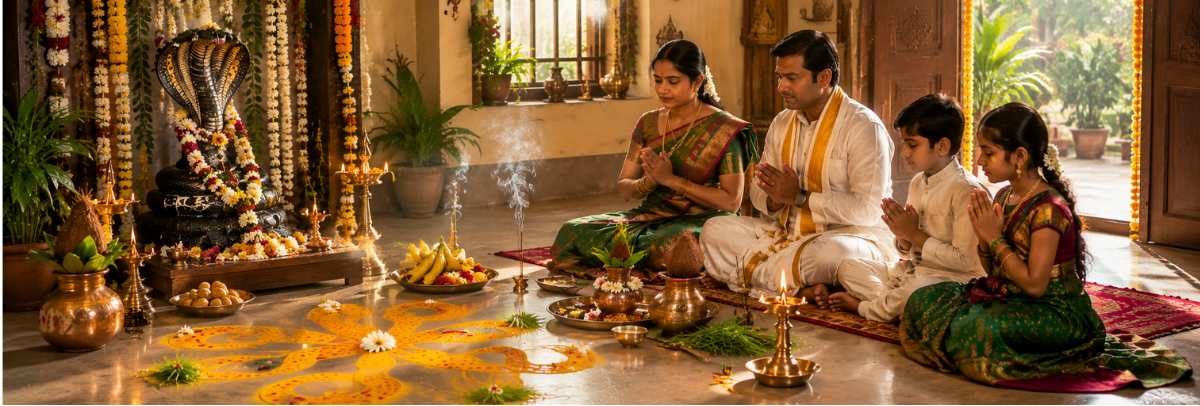
Preparation Begin the day with a holy bath and thoroughly clean the home and puja area before starting the worship.
Sankalp Take a sacred vow before the deity, expressing the intention of observing the Nag Panchami Vrat and Puja.
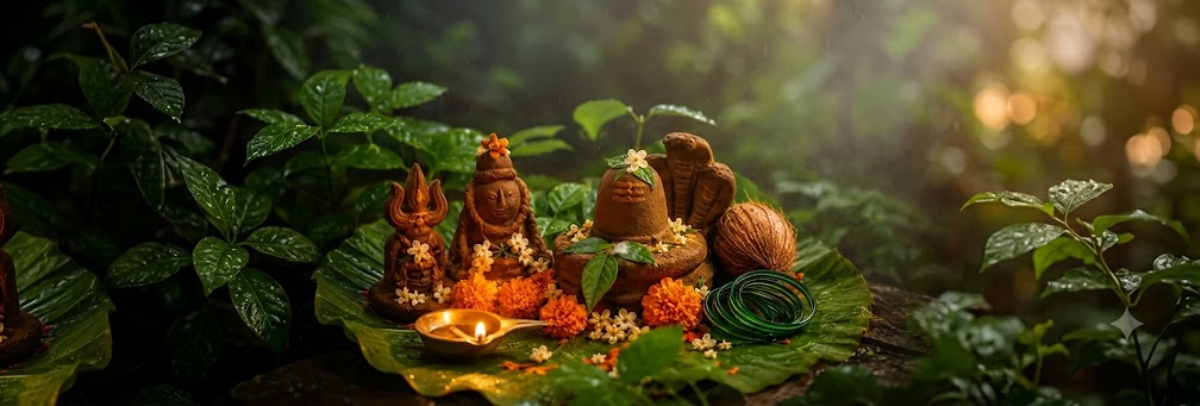
Setting Up the Puja Place an idol or image of Nag Devta. Traditional serpent figures may also be drawn using turmeric, sandalwood paste, or cow dung near the entrance or puja area.
Offerings Offer milk, water, flowers, Durva grass, kheer, sweets, and incense to Nag Devta with devotion.
Shiva Worship As Nag Panchami falls during the holy month of Sawan, devotees also perform Jalabhishek and worship Lord Shiva.
Mantra Chanting Recite Nag Devta mantras and prayers with sincerity while lighting a diya and incense sticks.
Aarti Conclude the puja with aarti and pray for the health, prosperity, and protection of the entire family.
Vrat Completion Those observing the fast break it after the puja, usually with a simple satvik meal, following family traditions.


There's a particular image that stays with anyone who has grown up around this festival: children crouched outside the house, tongues out in concentration, carefully drawing tiny serpent figures with turmeric paste while an elder corrects the curve of the tail. It's unhurried, almost meditative, and it's one of those small domestic scenes that television adaptations never quite capture.


On the symbolism of milk specifically, it's worth clarifying that the offering is meant for the idol or the drawn image, not for wild snakes. Milk is not part of a snake's natural diet, and pouring it over a live reptile can actually harm the creature. Temples across India are increasingly vocal about this distinction, encouraging devotees to direct their offerings towards representations of Nag Devta rather than animals found in the wild.


Do's and Don'ts on Nag Panchami


Do Don't
Observe the Nag Panchami Vrat with devotion and sincerity. Avoid digging the earth or disturbing the soil, as it is traditionally believed to protect snake habitats.
Worship Nag Devta at home or in a temple with proper rituals. Do not plough fields or carry out unnecessary agricultural digging on this day.
Visit serpent or Shiva temples if possible and offer prayers. Avoid cutting trees or branches unless absolutely necessary.
Pray for the health, prosperity, and well-being of your family. Avoid using sharp iron tools unless essential.
Treat snakes and wildlife with respect and maintain a safe distance. Never harm, capture, provoke, or attempt to handle snakes.


The logic behind avoiding digging or ploughing isn't superstition for its own sake; it comes from a practical concern that snakes often live underground, and monsoon soil disturbance could easily harm them, intentionally or not. Elders reminding younger family members not to poke at anthills on this particular morning is a small, oddly touching version of the same principle.


Famous Temples to Visit During Nag Panchami


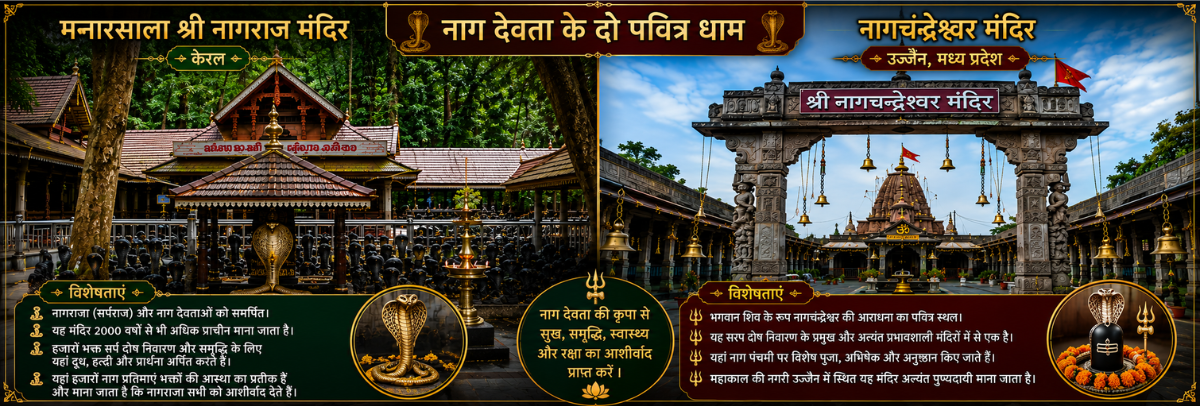
  • Mannarasala Sree Nagaraja Temple, Kerala
    Tucked within a forest grove in Alappuzha district, Mannarasala is unlike most temples you'll visit. It's surrounded by thousands of snake idols placed among the trees over generations, each one representing devotion offered across decades. The temple is closely tied to Nagaraja, the serpent king, and is looked after by a priestess, a tradition that itself sets it apart from most Kerala temples. During Nag Panchami, the numbers swell considerably, with devotees arriving to pray for children, for relief from ailments, and simply to walk through a grove that feels genuinely different from anywhere else.


  • Nagchandreshwar Temple, Ujjain
    This one has a quirk that draws pilgrims from across the country: the temple opens to the public only once a year, on Nag Panchami. Located within the Mahakaleshwar complex, it houses an idol of Shiva and Parvati seated upon a serpent, and the queue outside on this single day of the year stretches far beyond what the narrow lanes of Ujjain usually see. Given the festival's overlap with Shravan, the timing feels deliberate, tying serpent worship and Shiva devotion into a single, once-a-year moment.


Common Mistakes Devotees Should Avoid


A few habits, however well-intentioned, tend to cause more harm than good. Forcing milk into the mouths of live snakes has led to documented cases of animal distress and death, and most temple authorities now actively discourage it. Disturbing anthills out of curiosity, handling snakes casually because "it's an auspicious day," and skipping basic temple etiquette during visits are equally worth avoiding. The rituals were never meant to be literal interactions with wild reptiles; they're symbolic, directed towards idols and images that represent the serpent deities.


Why Nag Panchami Still Matters Today


Even today, in flats without courtyards and cities without visible anthills, families find a way to mark this day, sometimes with just a small drawing on a wall or a diya lit before a printed image of Nag Devta. What Nag Panchami really preserves isn't a fear of snakes, it's a habit of coexistence, a small annual pause to acknowledge that not every creature needs to be understood to be respected. And perhaps that's the quiet reason this festival has outlasted so many changes in how we live.


FAQs


Q1. When exactly is Nag Panchami in 2026?

Ans: It’s on Monday, August 17, 2026. If you’re planning to do the morning prayers, the ideal time (muhurat) is right between 5:51 AM and 8:29 AM.


Q2. What’s the story behind worshipping Nag Devta on this day?

Ans: It comes down to a legendary story from ancient scriptures. King Janamejaya once held a massive ritual called the Sarpa Satra to wipe out all snakes. A young sage named Astika stepped up and convinced him to stop, saving the serpent race. Ever since, people observe Nag Panchami out of gratitude and to pray for protection and harmony with nature.


Q3. Can you do the Nag Panchami puja at home?

Ans: Definitely. Most people actually do it at home. You don't need anything elaborate—just a small idol or a simple drawn image of Nag Devta. Offer a bit of milk and some fresh flowers, say a few prayers, and you're good to go.


Q4. Where do people usually travel for this festival?

Ans: If you look at the most famous places for Nag Panchami, two temples stand out:


  • Mannarasala Sree Nagaraja Temple in Kerala – A beautiful temple nestled in a lush forest dedicated to serpent gods.
  • Nagchandreshwar Temple in Ujjain – This one is unique because the main sanctuary is closed all year and only opens to the public on Nag Panchami.


Q5. Are there specific things you shouldn't do on Nag Panchami?

Ans: Yes, the traditions are all about respecting nature. People usually avoid digging the earth, cutting down trees, or doing anything that might disturb local wildlife.

You Might Also Be Interested In This