Raksha Bandhan 2026: Date, Shubh Muhurat, Rakhi Rituals, History and Celebration

Dheeraj Khandelwal
calender August 19, 2026

Mark the date: Raksha Bandhan 2026 is on Friday, 28 August. If you're the kind of person who starts asking about the muhurat a good two weeks early (let's be honest—most Indian households have at least one), here's everything worth knowing before the day arrives.


Raksha Bandhan, or Rakhi, as it's more commonly called, falls on Shravana Purnima, the full moon of the Shravan month. Below you'll find the exact Shubh Muhurat for 2026, why the date sometimes causes confusion, the rituals involved, a couple of the old stories behind the festival, and a few thoughts on how families keep it meaningful without turning it into a production.


Raksha Bandhan 2026: Date and Shubh Muhurat


So, Rakhi 2026 lands on 28 August. But here's where people get tripped up every single year: the Purnima Tithi actually starts the day before, on 27 August. Does that mean the 27th is the "real" date? Not quite. Hindu festivals go by whichever day the tithi is present at sunrise, and that's the 28th, so that's your answer.


Detail Timing
Raksha Bandhan 2026 Friday, 28 August 2026
Purnima Tithi begins 9:08 AM, 27 August 2026
Purnima Tithi ends 9:48 AM, 28 August 2026
Rakhi tying Shubh Muhurat 5:57 AM to 9:48 AM, 28 August 2026
Duration 3 hours 51 minutes
Bhadra Kaal Ends before sunrise on 28 August


Two things decide when the rakhi should be tied. First, the Purnima Tithi needs to be active, since the whole festival is built around the full moon day. Second, Bhadra Kaal has to be avoided; it's considered an inauspicious stretch in the panchang, and tying a rakhi during it is traditionally frowned upon. This year works out nicely on both counts. Bhadra wraps up before sunrise, so there's no clash with the morning window at all. Families can simply start the ritual whenever they're ready, without checking the clock every ten minutes.


What is the Significance of Raksha Bandhan?


'Raksha' means 'protection'. Bandhan means a tie or a bond. Put together, that's really the whole idea: a thread that stands in for a promise rather than just something pretty on the wrist.


When a sister ties a rakhi, she's asking for her brother's protection and wishing him well. He, in turn, is expected to look out for her. It's not meant to run one way. There's an old-fashioned idea of duty tucked into it, but also plenty of warmth, which is probably why it's survived so long without feeling like an obligation nobody wants.


The festival has stretched well beyond its original shape over the years. Rakhis now go to cousins, close friends, and sometimes even neighbours who've earned that kind of trust. Every family seems to have its own version of "how we do it", shaped by region, upbringing, or just habit. What stays the same, more or less, is the idea underneath it all: a bond that gets renewed, year after year.


Stories and Legends Behind Raksha Bandhan


A few stories get told and retold around this festival. Worth saying upfront: these are traditional accounts, part of mythology rather than documented history, but they explain a good deal about why the day carries the weight it does.


Draupadi and Lord Krishna


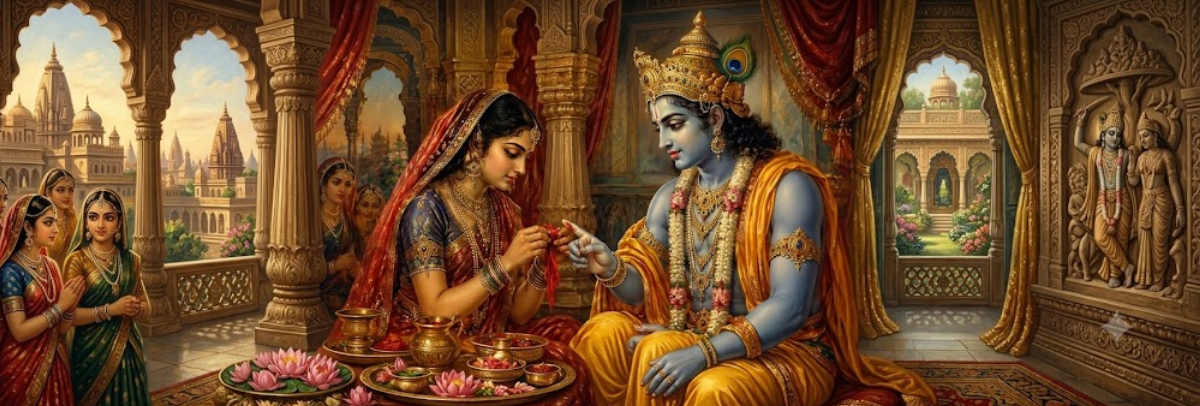
This one comes from the Mahabharata. Krishna cuts his finger, the story goes, and Draupadi tears a strip from her saree to bind the wound. He's moved by the gesture and promises to protect her whenever she needs him, a promise many later connect to his intervention during her humiliation in the Kaurava court. Krishna and Draupadi weren't siblings, but the story still gets cited as one of the earliest examples of the kind of protective bond Raksha Bandhan has come to stand for.


Yamuna and Lord Yama


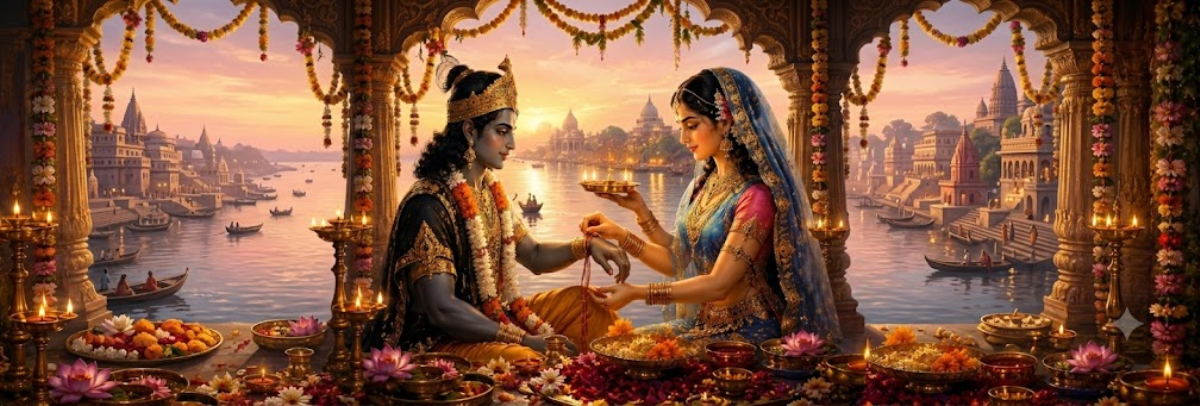
A quieter legend, this one, but no less important. Yamuna, the river goddess, welcomes her brother Yama, the god of death, and ties a sacred thread on his wrist. He's touched enough by her affection to grant her a boon: immortality. It's this story that a lot of people point to when they talk about a rakhi bringing blessings of longevity, not just protection.


Raksha Bandhan Rituals: How is Rakhi Celebrated?


The ritual itself doesn't take long, but each part means something.


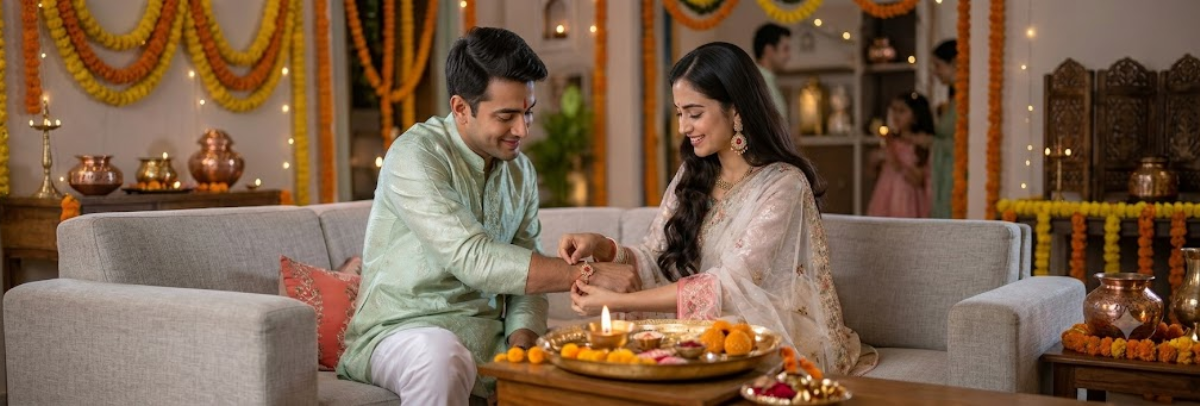
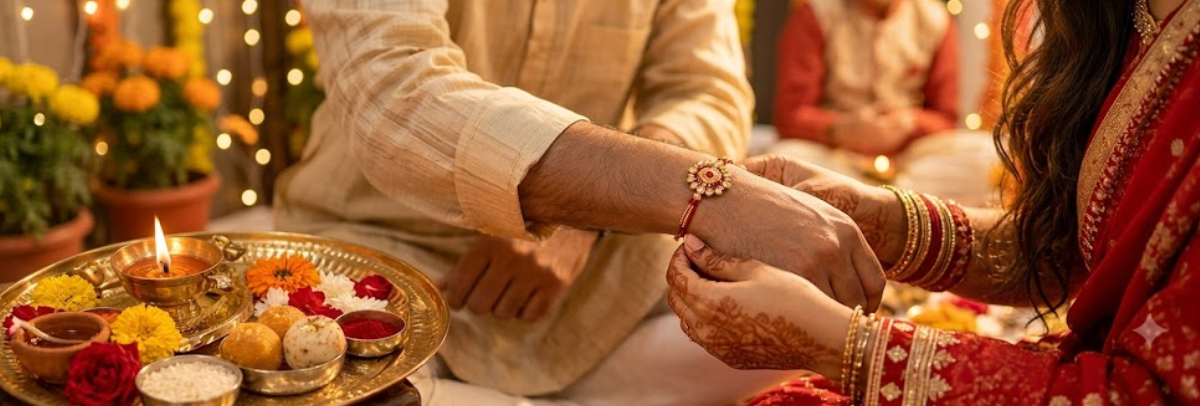
It usually starts with the sister putting together a puja thali before calling her brother over. A diya gets lit first, meant to clear away obstacles and mark the start of something auspicious. Then comes the tilak, roli and akshat applied to the forehead, a gesture believed to bring protection and a clear head.


After that, a short aarti, a way of showing reverence before the main event. The rakhi goes on the right wrist, which is the traditional side for this kind of ritual, and a sweet follows straight after, a small gesture that's meant to mark the sweetness of the relationship being reaffirmed. Gifts usually come next. Many families round things off by touching the feet of elders in the room and asking for their blessing too, since the day rarely stays confined to just two people.


What Should a Rakhi Puja Thali Contain?


Nothing about the thali needs to be fancy. The basics are:


  • Rakhi – the thread itself, obviously
  • Roli or kumkum – for the tilak
  • Akshat – unbroken rice, standing in for prosperity
  • Diya – lit before the ritual begins
  • Rice – often paired with the akshat
  • Sweets – for after the Rakhi goes on
  • Flowers – part decoration, part offering
  • Incense – where the family tradition calls for it


None of this needs to cost much. The intention behind it matters far more than what's actually sitting in the thali.


How is Raksha Bandhan Celebrated Across India?


The core ritual barely changes from one region to another, but the day around it does. In several parts of the country, Shravana Purnima overlaps with other observances, and families often fold both into the same day without much fuss.


Coastal communities, for instance, mark the changing of the season alongside the rakhi ceremony, with practices tied to the sea. Elsewhere, the day stays smaller, just family, breakfast, and the ritual itself. None of these variations take anything away from what the festival is fundamentally about. If anything, it says something that the same idea can look so different depending on where you're standing and still hold together.


Raksha Bandhan and Mathura-Vrindavan


If you're looking to add something extra to the day, Mathura–Vrindavan Temples are worth a mention. The region carries deep significance in Krishna tradition, and visiting around Shravan gives travellers a chance to see the temple rituals connected to Krishna worship up close, alongside the festival atmosphere.


The Dwarkadhish Temple (Mathura) stands out here. Built in the nineteenth century, it's one of the city's most prominent Krishna temples, and it sees a noticeable rise in footfall during major festivals tied to his life, Raksha Bandhan included, given the Draupadi connection. None of this means the festival belongs to Mathura specifically. It doesn't. But for anyone travelling during this period, it's a natural stop, one that adds a devotional layer without replacing the ritual families already do at home.


How to Celebrate Raksha Bandhan in a Meaningful Way


Life doesn't always leave room for the kind of unhurried celebration earlier generations might have had. That's fine. The core of the day survives without much effort.


  • Do the ritual together, even if it's over in ten minutes
  • Sit down for a family meal afterwards, without rushing it
  • Pick gifts that show some thought rather than a big price tag
  • Call or video message siblings who can't be there in person
  • Let younger family members take part in the puja, so it gets passed down
  • Go for handmade or traditional rakhis over the mass-produced kind, if you can


None of this takes much planning. It just needs a bit of intention, which tends to be what makes the day stick in memory anyway.


Conclusion


Raksha Bandhan 2026 falls on Friday, 28 August, with the Shubh Muhurat running from 5:57 AM to 9:48 AM, an easier window this year thanks to Bhadra Kaal ending before sunrise. But the timings are really just the practical part. What keeps the day going, year after year, is what it stands for rather than the mechanics of the ritual.


The stories of Draupadi and Krishna, or Yamuna and Yama, were never meant to be read as fact. They're there to carry an idea that's clearly outlived them both: protection, once promised, is worth renewing. Whether that happens in a quiet ceremony at home or with a visit to a temple town like Mathura, Raksha Bandhan still comes down to the same thing it always has: the relationships people choose to hold onto.


FAQs


Q1. When is Raksha Bandhan in 2026?

Ans: Friday, 28 August 2026, observed on Shravana Purnima.


Q2. What is the Shubh Muhurat for Rakhi in 2026?

Ans: The auspicious time, excluding Bhadra Kaal, is 3 hours and 51 minutes, from 5:57 AM to 9:48 AM on 28 August 2026.


Q3. What is Significance of Raksha Bandhan?

Ans: It is a symbol of protection and of shared responsibility, traditionally between brothers and sisters and represented by the tying of a sacred thread.


Q4. What are the rituals of Raksha Bandhan?

Ans: Prepare puja thali, light diya, put on tilak, perform aarti, tie rakhi on right wrist & give sweets & gifts.


Q5. What should you put in a Raksha Bandhan pooja thali?

Ans: Rakhi, roli or kumkum, akshat, a diya, rice, sweets, flowers and incense according to family tradition.

You Might Also Be Interested In This