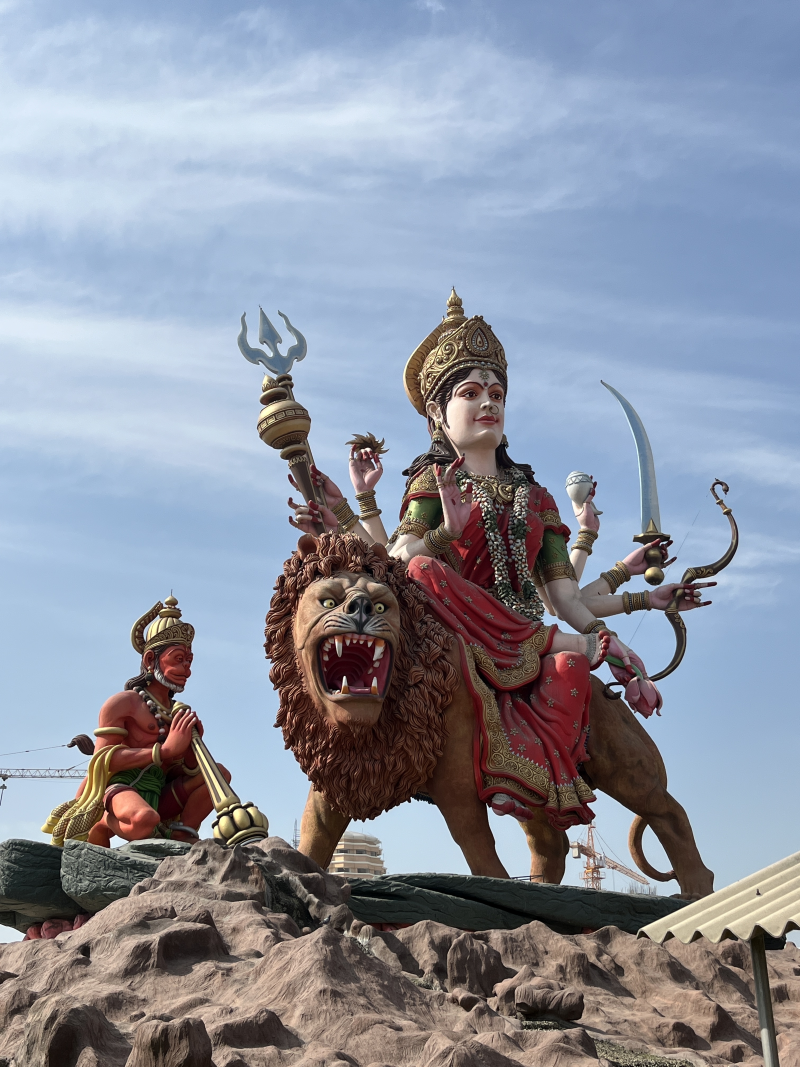
When Is Saraswati Puja in 2026?
In many homes, the last few days of Navratri bring a quiet change of routine. Schoolbags are set down, textbooks are stacked in a corner, and a veena or harmonium is wiped clean and carried to the puja space. For a short while, nobody studies from those books or practises on those instruments. They are left before Goddess Saraswati instead.
That is the setting for Saraswati Puja 2026, with the main worship falling on Saturday, 17 October 2026. The observance runs across several days, so it helps to see the whole sequence:
| Observance |
Date |
| Saraswati Avahan |
Friday, 16 October 2026 |
| Main Saraswati Puja |
Saturday, 17 October 2026 |
| Saraswati Balidan |
Sunday, 18 October 2026 |
| Saraswati Visarjan / Navami |
Monday, 19 October 2026 |
| Vidyarambham Day |
Wednesday, 21 October 2026 |
This article is about the Saraswati worship that takes place during the closing phase of Sharad Navratri, the autumn festival. It is not about the spring Saraswati Puja on Vasant Panchami, which many readers, especially in North India, will know better. Both are covered below.
A note on timing: no single clock-time muhurat applies everywhere. If you want an exact window, check a panchang for your own city or ask your family priest, because timings shift with location.
Saraswati Puja During Sharad Navratri: Why Is It Observed?
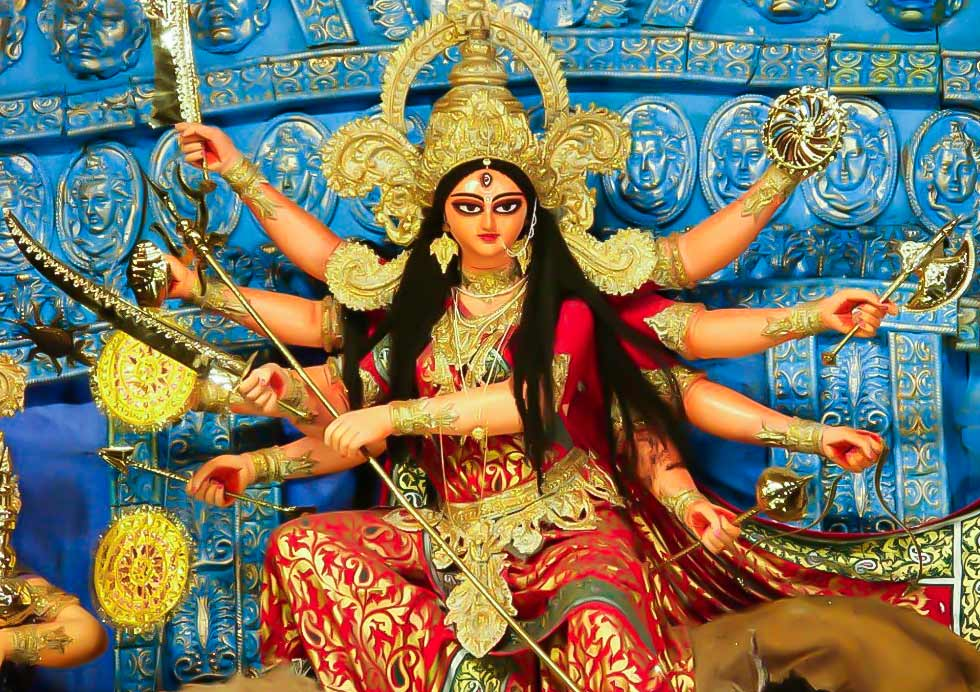
Goddess Saraswati is associated with knowledge, wisdom, learning, music and the arts. Devotees turn to her when they begin a new course of study, sit an exam, pick up an instrument or start any work that depends on skill.
In parts of South India, West India and some eastern traditions, she is worshipped during the final days of Sharad Navratri. That is why people searching for the "Saraswati Puja date" can land on very different answers. Someone using a North Indian calendar may be thinking of Vasant Panchami in the spring, while someone following a South, West or eastern calendar means the October observance. Neither is a mistake. They are separate regional traditions of honouring the same goddess, and neither is more authentic than the other.
If a date you have seen doesn't match this one, check which tradition and calendar it comes from.
Saraswati Avahan – 16 October 2026
The sequence begins with Avahan, the invocation or ceremonial welcoming of the goddess. The word carries the sense of inviting her into the home or puja space, much as you would welcome an honoured guest.
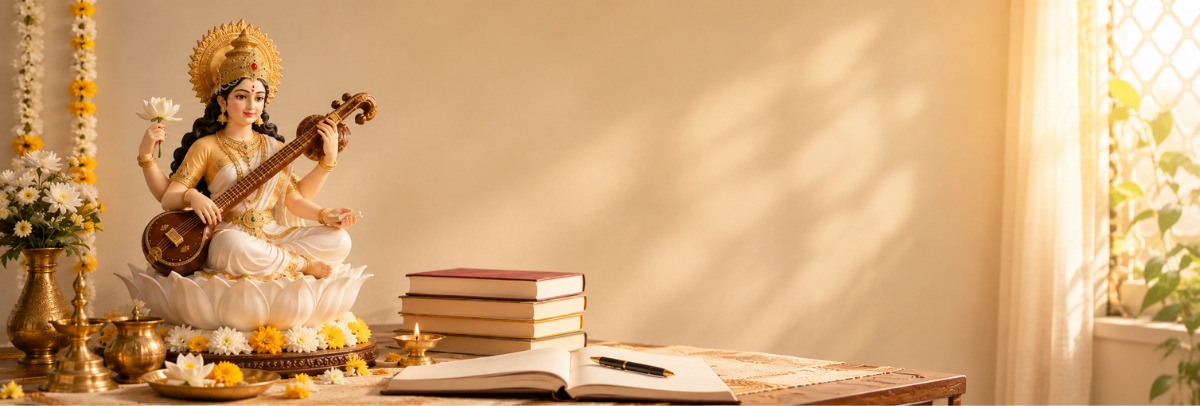
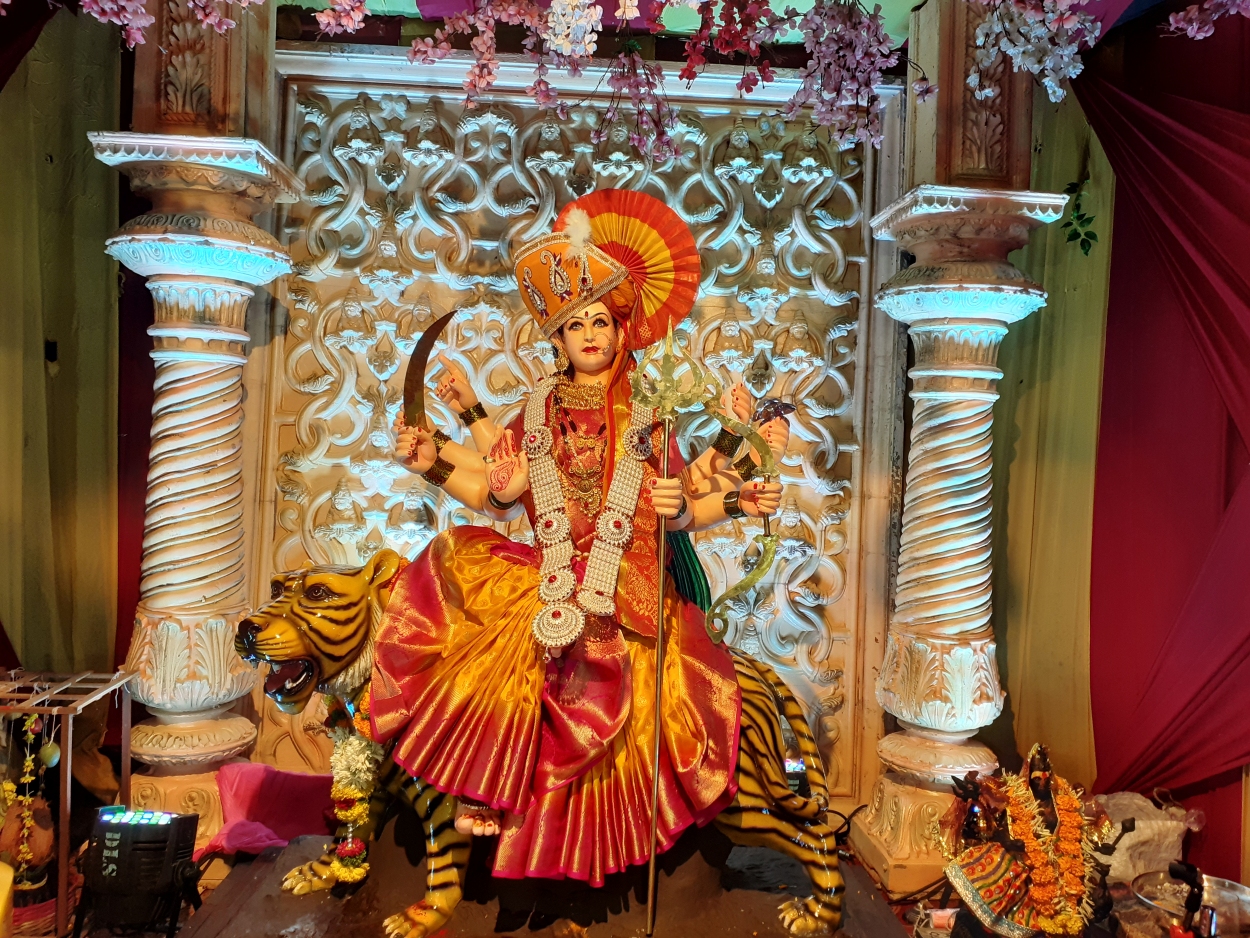
Preparation is practical. The space is cleaned, and the idol or image of Saraswati is placed. Then comes the part that sets this observance apart: books, musical instruments, learning materials and the tools of one's work or art are placed near her.
It is worth pausing on what that gesture means. These are the objects people reach for every day, often without a second thought. For the duration of the puja they are set aside, not used, and offered. The pause turns ordinary things into something to be respected, which is a different spirit from ticking off a ritual checklist.
Saraswati Puja Vidhi: How Is the Puja Performed?
Exact practice varies by region and by family, so treat the following as a general outline and follow your own household's custom where it differs.
- Prepare the space. Clean the area where the puja will take place.
- Place the deity. Set up an idol or image of Goddess Saraswati.
- Arrange the objects. Put books, instruments and relevant tools near her.
- Invoke the goddess. This is the Avahan described above.
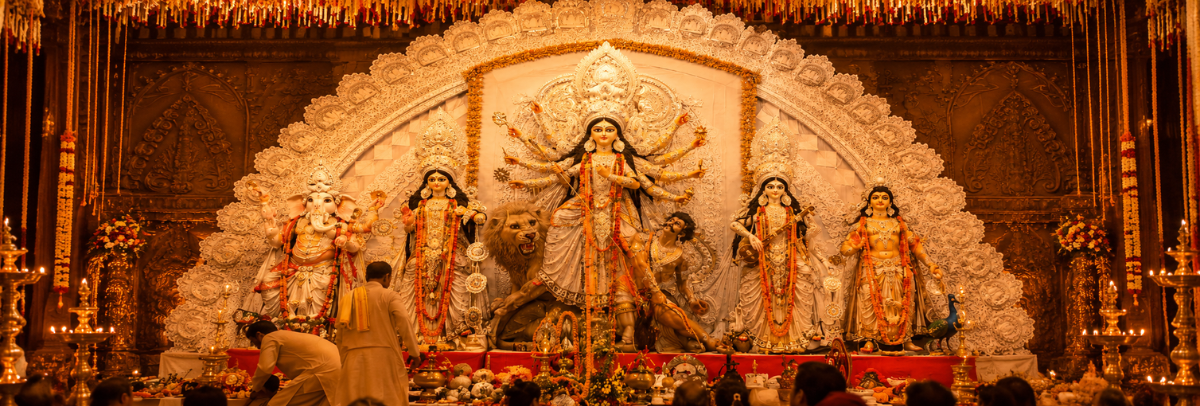
- Make offerings. Flowers, incense, lamps and other customary offerings are presented. Families may differ in what they offer, and there is no need to match another household's list.
- Recite prayers or mantras. Traditionally, prayers dedicated to Saraswati are said.
- Perform aarti and conclude. The worship closes with aarti.
None of this requires an elaborate setup. Many families keep it simple, and what matters in most traditions is the intention behind it.
Saraswati Puja Mantra & Prayers
Prayer sits at the centre of the worship. Devotees recite prayers dedicated to Goddess Saraswati, asking for wisdom, learning, creativity and clarity of mind. For a student, that might mean focus before examinations. For a musician or artist, it might mean a steadier hand and a clearer ear.
There are well-known Sanskrit prayers to Saraswati, but I haven't quoted one here. Sanskrit wording and transliteration need to be exact, and the version a family recites often depends on their own tradition or what a teacher taught them. If you want a specific mantra, ask your family priest or use a verified source from your tradition. Reciting a prayer you understand matters more than reciting a long one.
Why Are Books and Musical Instruments Worshipped?
This is probably the most distinctive part of the observance. Most worship happens in a temple or a home shrine, in front of a deity. Here, the objects of daily life come into the puja space too.
The logic is easy to follow. A student's books are how she learns, a musician's instrument is how he speaks, and an artist's materials are how a vision becomes something real. Placing them before Saraswati extends the idea of worship beyond formal religious spaces. Students honour books, musicians honour instruments, artists honour their craft, and professionals may honour the tools through which they work.
It also changes how people treat those objects. A textbook is no longer just something to get through before an exam, and an instrument is no longer just something to practise on. For a day or two, they are treated as worthy of care.
Saraswati Balidan – 18 October 2026
The next stage in the schedule is Saraswati Balidan, on Sunday, 18 October 2026. It forms part of the concluding sequence of worship, coming after the main puja and before the observance winds down.
Practice around Balidan differs between regions and communities, and it is not observed in the same way everywhere. Rather than describe one version as the standard, I'd suggest following the custom of your own family or local temple. If you are unsure what your tradition expects on this day, a local priest is the best person to ask.
Saraswati Visarjan & Navami – 19 October 2026
The worship period draws towards its close on Monday, 19 October 2026, marked as Saraswati Visarjan / Navami. Navami is the ninth day of Navratri, so this falls in the final phase of the festival.
Visarjan marks the symbolic conclusion of the period of Saraswati worship. The books and instruments that were set aside are typically taken back into use afterwards, and study and practice resume. Not every region performs Visarjan in exactly the same way, so what is described here is tied to the tradition this article follows.
Vidyarambham Day – 21 October 2026
The sequence ends on Wednesday, 21 October 2026 with Vidyarambham, a traditional initiation into learning. It is associated especially with children who are beginning formal education, and it is one of the most affecting parts of the whole observance.
The idea is simple: a child's first steps into learning are made under the blessing of the goddess of knowledge. It links directly to everything that came before. After days of honouring books and tools, a new learner takes up the first of them.
Customs around Vidyarambham differ from region to region and family to family. If you are planning one for a child, speak to a priest or elder in your community about how it is done in your tradition.
Saraswati Puja 2026: Complete Schedule at a Glance
| Date |
Observance |
What It Marks |
| 16 October |
Saraswati Avahan |
Invocation of Goddess Saraswati |
| 17 October |
Saraswati Puja |
Main worship |
| 18 October |
Saraswati Balidan |
Part of the concluding worship sequence |
| 19 October |
Saraswati Visarjan / Navami |
Conclusion of the Saraswati worship period |
| 21 October |
Vidyarambham |
Traditional initiation into learning |
Saraswati Puja vs Vasant Panchami: What's the Difference?
| Feature |
Sharad Navratri Saraswati Puja |
Vasant Panchami |
| Season |
Autumn |
Spring |
| 2026 date discussed here |
17 October |
Not the focus of this article |
| Context |
Final days of Sharad Navratri |
Separate spring observance |
| Regional association |
South, West and some eastern traditions |
More commonly associated with North India |
| Main focus |
Goddess Saraswati, learning, arts and knowledge |
Goddess Saraswati, learning and wisdom |
These are not rival versions of one festival. Both are legitimate traditions of worshipping the same goddess, shaped by region, season and local custom. Many families observe one and not the other, and some observe both.
The Significance of Saraswati Puja
At its heart, the puja is about the value Hindu tradition places on knowledge: knowledge over ignorance, and learning as something worth honouring. Several ideas come together in the observance:
- Learning and intellectual growth are treated as worth celebrating, not just pursuing.
- Music, art and creativity share the stage with academic study.
- Respect for books and instruments is built into the ritual itself.
- Teachers, students and the pursuit of knowledge are held in high regard.
It is easy to say that Saraswati "blesses devotees with knowledge", and believers do understand it that way. What the ritual shows more concretely is where it puts its attention. For these days, learning and creative work are the focus. The books go on the altar, the instruments are offered, and the tools of the trade are treated with reverence.
How Saraswati Puja Connects Faith With Everyday Learning
Think about what actually sits in front of the goddess: a school notebook with a curling cover, a harmonium that has seen years of practice, a laptop, a paintbrush, a set of spanners. None of these is sacred in the way an idol is. They are sacred because of what they make possible.
That is perhaps why the tradition holds up so well. For a student, it is a reminder that a pile of books is a privilege. For a musician, it is a pause in a practice routine that can otherwise feel relentless. For anyone whose work depends on a skill, it is a moment to acknowledge how much of life rests on things learned slowly, over years.
And when the puja ends and the instruments go back into daily use, the music is no different, but the person playing it may be a little more attentive.
Conclusion
The 2026 sequence runs Avahan → Saraswati Puja → Balidan → Visarjan → Vidyarambham, moving from invitation to worship to conclusion and, finally, to a child's first lesson. Underneath it all is a simple idea: learning, wisdom and creativity deserve to be celebrated.
It is worth remembering that this October observance is a regional Sharad Navratri tradition, distinct from the better-known Vasant Panchami Saraswati Puja. They honour the same goddess in different seasons and different places.
FAQs
Q1. When is Saraswati Puja in 2026?
Ans. The main Saraswati Puja during Sharad Navratri falls on Saturday, 17 October 2026, with Avahan on 16 October and the sequence concluding with Vidyarambham on 21 October. The spring Saraswati Puja on Vasant Panchami is a separate observance.
Q2. What is the Saraswati Puja date during Sharad Navratri 2026?
Ans. Saturday, 17 October 2026. Saraswati Avahan is on 16 October, Balidan on 18 October, and Visarjan / Navami on 19 October.
Q3. What is the Saraswati Puja vidhi?
Ans. Traditionally, the space is cleaned, an idol or image of Saraswati is placed, and books, instruments and tools are arranged nearby. The goddess is invoked, offerings are made, prayers are recited, and the puja ends with aarti. Details vary by region and family.
Q4. Which mantra is recited during Saraswati Puja?
Ans. Devotees recite prayers dedicated to Saraswati, asking for wisdom, learning and creativity. The specific mantra depends on family and regional tradition, so it is best to ask a priest or elder, or use a verified source from your own tradition.
Q5. What is the significance of Saraswati Puja?
Ans. It honours Goddess Saraswati as the deity of knowledge, music and the arts. By placing books, instruments and tools before her, the ritual puts learning and creative work at the centre of the observance.