Top 10 Amazing Facts About Jagannath Rath Yatra

shilpatest
calender July 1, 2026

On 16 July 2026, the Grand Road of Puri will vanish under a sea of people. Three towering wooden chariots, hauled by ropes thick as a man's arm, will roll through streets that have seen this same scene for the better part of a millennium. It's one of the most fascinating Jagannath Rath Yatra facts there is that something this enormous, this loud, this unmistakably alive, has barely changed in centuries. Here are ten details that explain why.


1. Lord Jagannath "Falls Ill" for a Fortnight


After the grand bathing ritual of Snana Yatra, something curious happens inside the temple: Lord Jagannath, Lord Balabhadra and Goddess Subhadra are believed to fall sick, too unwell for public darshan. The doors close for fifteen days, a period called Anasara, while temple physicians, the hereditary daitapatis, apply medicinal pastes to the wooden idols as one might nurse a feverish relative.


The story that keeps this tradition alive in popular memory belongs to a weaver named Madhav Das. His devotion to Lord Jagannath was so constant that he visited the temple daily, and when the doors shut for Anasara, he simply refused to accept the separation, returning each day to plead at the closed gates. His persistence, the story goes, moved the temple authorities enough that some exception for a brief glimpse was made for him. The literal facts have softened with retelling, but the message hasn't: genuine longing for the divine resists being shut out, even by sacred decree.


2. There Are Three Chariots, Each With Its Own Character


This isn't one chariot procession but three, built entirely fresh each year, with nothing reused. Nandighosha, Lord Jagannath's chariot, leads:  red and yellow, the tallest of the three, rolling on sixteen wheels. Taladhwaja, Lord Balabhadra's chariot, follows in red and green on fourteen wheels, his position reflecting his role as elder brother. Darpadalana, Goddess Subhadra's chariot, is the most modestly sized, red and black, on twelve wheels, her name meaning roughly "destroyer of pride". Hereditary carpenters assemble all three without a single nail, a feat of memory and craft passed down through generations rather than written into any manual.


3. The World's Largest Temple Kitchen Defies Logic


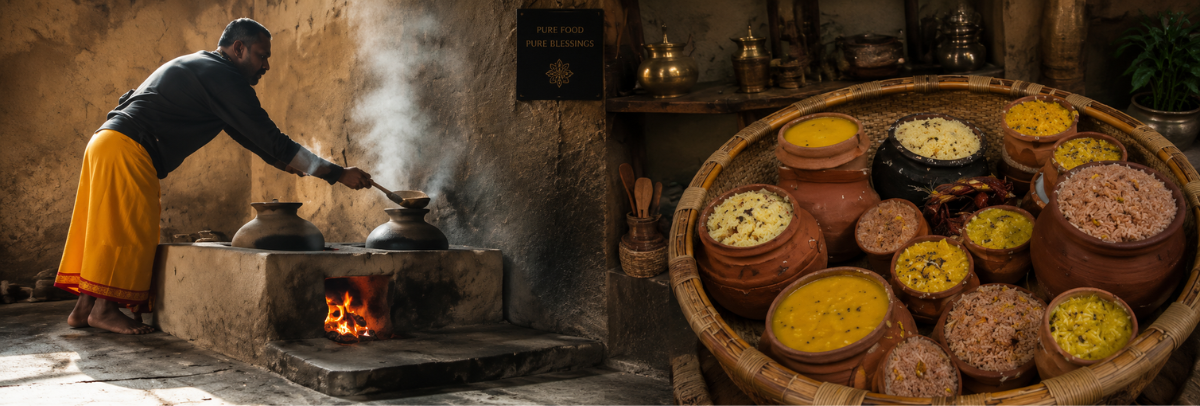
Inside the temple complex sits the Rosaghara, widely considered the world's largest functioning kitchen, feeding tens of thousands of devotees daily during festivals like this one. Hundreds of earthen pots are stacked one atop another over wood-fired stoves, and against ordinary physics, devotees insist the topmost pot, furthest from the flame, cooks first.


The resulting food, Mahaprasad, is sacred not for any special ingredient but for its journey: offered first to Lord Jagannath, then to Goddess Vimala, and only then distributed to anyone, regardless of caste or status. In a country still shaped by social hierarchy, that detail carries real weight.


4. The Destination Is Their Aunt's House


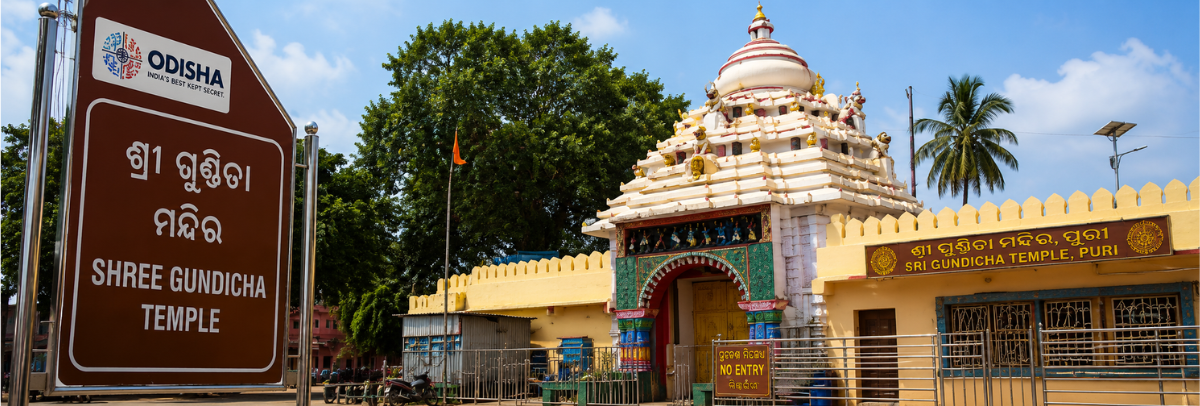
The chariots travel roughly three kilometres to the Gundicha Temple, believed to be the deities' birthplace and the home of their maternal aunt. Some tellings say Goddess Subhadra simply wished to visit family, and her brothers obliged. The deities stay at Gundicha for several days before the return journey, Bahuda Yatra, carries them home. It's an unusually domestic narrative for a festival of this scale: gods who go visiting relatives and come back, just like everyone else.


5. The Temple Is Almost 900 Years Old


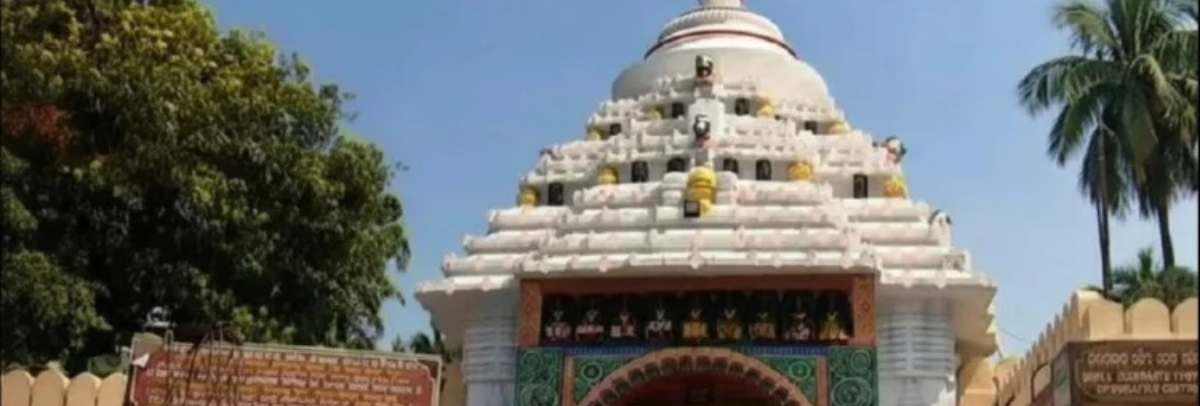
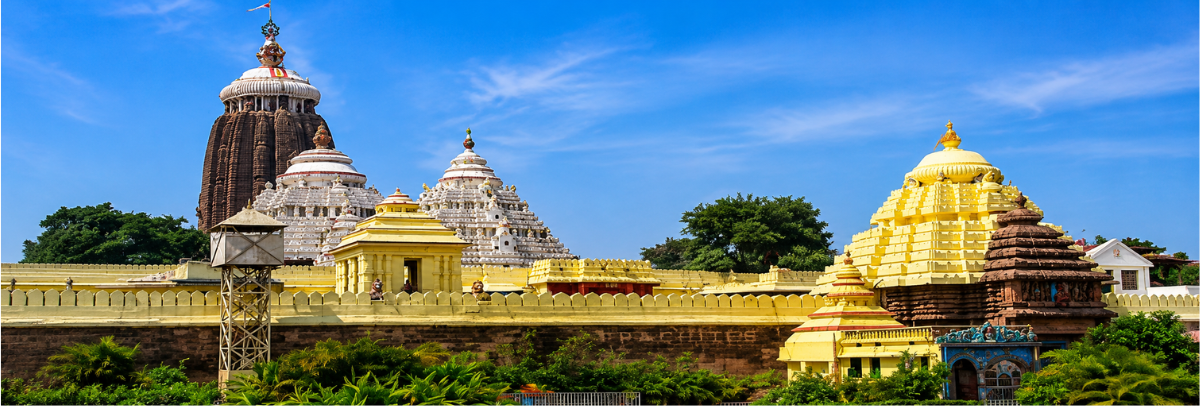
The Jagannath Temple itself predates the festival's modern fame by centuries. Most evidence credits King Anantavarman Chodaganga Deva of the Eastern Ganga dynasty with its construction, begun sometime after 1112 CE and completed under his successors. Built in Odisha's distinctive Kalinga style and rising roughly 214 feet, the temple has weathered repeated invasions and desecrations over its history, yet the Rath Yatra has continued through nearly all of it, regardless of which dynasty held power at the time.


6. Once a Year, Puri's King Picks Up a Broom


Before the chariots move, the Gajapati Maharaja of Puri arrives carrying a golden-handled broom and sweeps the ground around them himself, in full public view. This ritual, Chhera Pahanra, exists because the Gajapati is traditionally regarded as the very first servitor of Lord Jagannath, the adi sevaka, and the sweeping reaffirms, broom in royal hands, that before the Lord, even a king is simply a servant like any other.


7. Why Rath Yatra Means So Much


Entry into the temple's inner sanctum has long been restricted by faith and, historically, by caste. Rath Yatra exists almost as a correction: once a year, the deities leave the sanctum entirely and come out onto the open street, where anyone – Hindu or not, of any background, can stand close enough to look them in the eye.


That's why pulling the chariot ropes carries such weight. Devotees believe the physical act of hauling the chariot earns spiritual merit equal to years of temple worship, and the rope makes no distinction between the hands gripping it. A labourer and a foreign visitor can pull the same length of rope side by side — which is precisely the kind of unmediated closeness to the divine that few other festivals offer and exactly why millions plan their year around being in Puri for it.


8. Why the Idols Look Nothing Like Other Deities


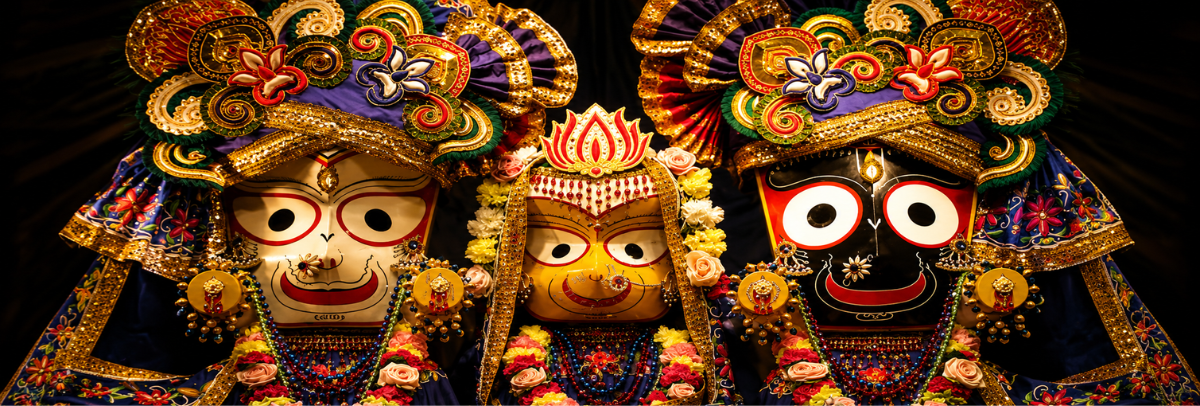
Visitors are often quietly startled by the idols' appearance — large round eyes, stylised heads, no carved arms or legs. Several explanations exist side by side rather than one settled answer. One legend tells of the divine craftsman Vishwakarma, who agreed to carve the idols only if left undisturbed, but King Indradyumna grew anxious and looked too soon, leaving the work permanently unfinished. A more symbolic reading holds the form is intentional: the wide eyes representing watchfulness over devotees and the missing limbs suggesting the Lord moves through the world only through human devotion. Scholars also trace the form to older tribal worship traditions in the region, predating mainstream Vaishnavism, where deities were represented in similarly abstracted wooden shapes. None of these cancel each other out — together they show how the form has gathered meaning across very different eras.


9. The Idols Are Carved From Sacred Trees


Unlike the stone or metal murtis found elsewhere, Jagannath, Balabhadra and Subhadra are carved from neem wood believed to hold divine presence – Daru Brahma, "the divine in wood". Specific trees are chosen only after scouts find particular sacred markings and astrological conditions align. At intervals historically ranging between eight and nineteen years, the existing idols are ceremonially retired and replaced through Nabakalebara, "new embodiment" — the old forms buried with full ritual honour rather than discarded. Few traditions frame divine renewal in such literal, physical terms.


10. What Rath Yatra Really Stands For


Strip away the crowds and the centuries of ritual detail, and what remains is simple: devotion shouldn't need permission, hierarchy means little before genuine faith, and even the divine occasionally steps outside to meet people rather than waiting for them to come in. A king sweeping the road himself. A weaver's stubborn love, remembered generations later. A meal shared without regard for who eats it. Three siblings are making an annual trip to see family. None of these are grand theological statements — they're small, human gestures repeated faithfully despite invasion and upheaval, which is probably why Rath Yatra still draws the crowds it does. It isn't a festival you simply watch. It's one that asks you to grab a rope alongside a stranger and, for a moment, forget what usually separates the two of you.


Frequently Asked Questions


Q1. When is Jagannath Rath Yatra 2026?


Ans: The main procession falls on Thursday, 16 July 2026, on Dwitiya Tithi of Shukla Paksha in the month of Ashadha. The return journey, Bahuda Yatra, follows about a week to nine days later; exact muhurat timings are confirmed closer to the date by the temple administration.


Q2. Why does Lord Jagannath fall sick before Rath Yatra?


Ans: It relates to Anasara, the fortnight following the deities' ceremonial bathing during Snana Yatra. Tradition holds the exposure to water leaves them unwell, requiring rest and seclusion before they're considered fit to travel.


Q3. Why are there three chariots instead of one?


Ans: Each deity is treated as an independent divine personality rather than a subordinate figure, so each travels on a separate chariot — though the differing sizes and wheel counts still reflect their relationship as siblings journeying together.


Q4. Why is Mahaprasad so famous?


Ans: Less for taste, more for what it represents: food offered without regard for who eventually receives it, shared across caste and status lines that otherwise hold firm elsewhere in Indian life.


Q5. Can anyone pull the Rath Yatra chariots?


Ans: Yes. While the temple's inner sanctum stays restricted, the chariot procession on the open street welcomes everyone, regardless of faith or nationality — one of the rare moments in Indian temple culture where visitors take part directly rather than simply observing

You Might Also Be Interested In This