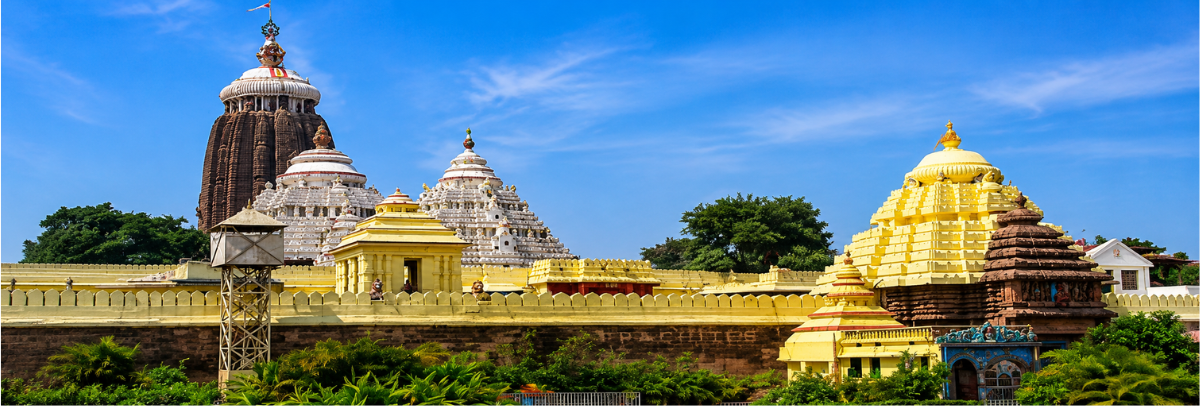
Jagannath Puri Rath Yatra 2026: Story, Date, Rituals & Travel Guide

shilpatest
calender June 23, 2026

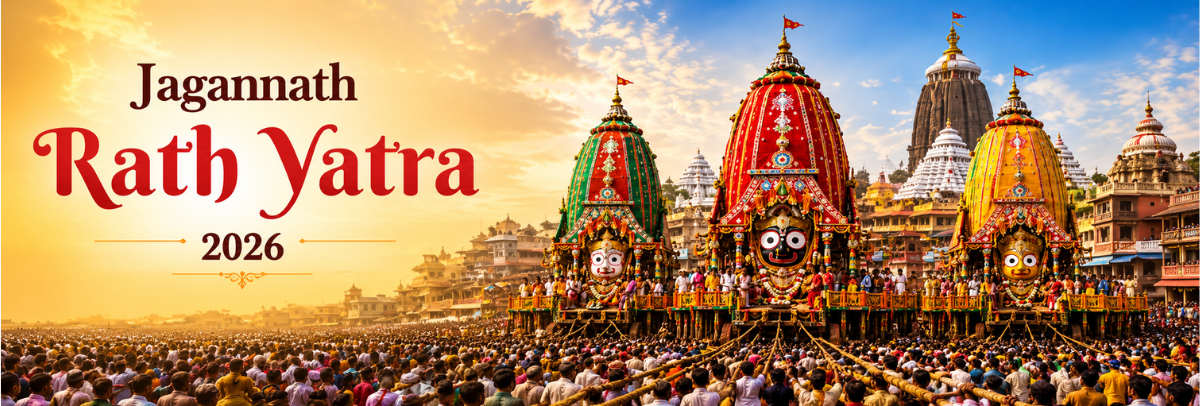
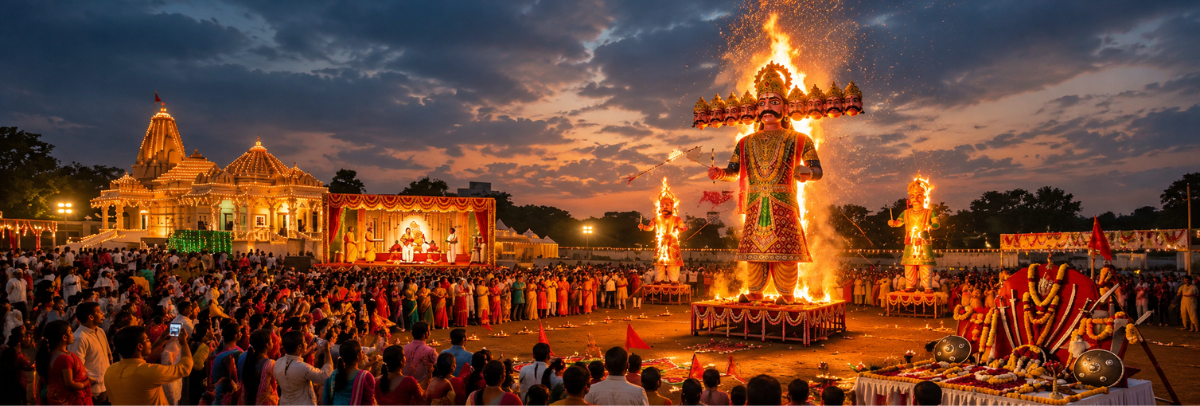
The rope comes first. Before you see the chariot, before you even spot the crowd properly, someone hands you a length of thick, sun-warmed jute and says, simply, "Pull." You don't ask questions. Around you, a few hundred thousand people are doing the same thing, and somewhere ahead, swaying on sixteen wooden wheels taller than a grown man, Lord Jagannath is leaving the temple he has lived in for centuries.


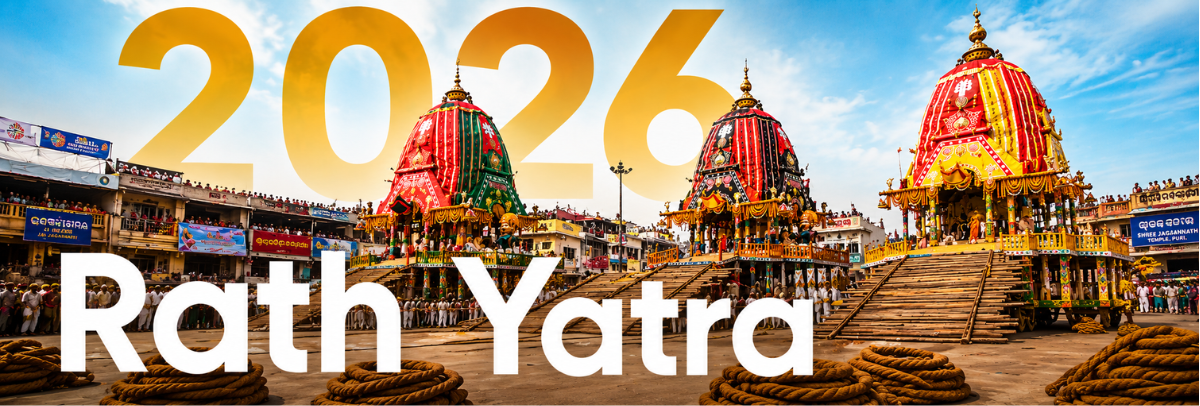
This is Puri in mid-July. This is the Jagannath Puri Rath Yatra 2026, and if you've never stood on Bada Danda when the chariots start moving, no description quite prepares you for the sound — drums, conch shells, a million voices, and underneath all that noise, a strange and total quiet. It's this experience that makes the Puri Rath Yatra 2026 one of India's most remarkable spiritual gatherings.


Jagannath Rath Yatra 2026 Date


If you're planning to witness the Jagannath Rath Yatra 2026 date, mark it now, not later. The main Rath Yatra falls on Thursday, July 16, 2026. The deities stay at the Gundicha Temple for nine days, and the return journey, Bahuda Yatra, is on July 24, 2026. Hotels in Puri tend to vanish weeks before the date, so this isn't the kind of festival you plan two days in advance.


The Story Behind Jagannath Rath Yatra


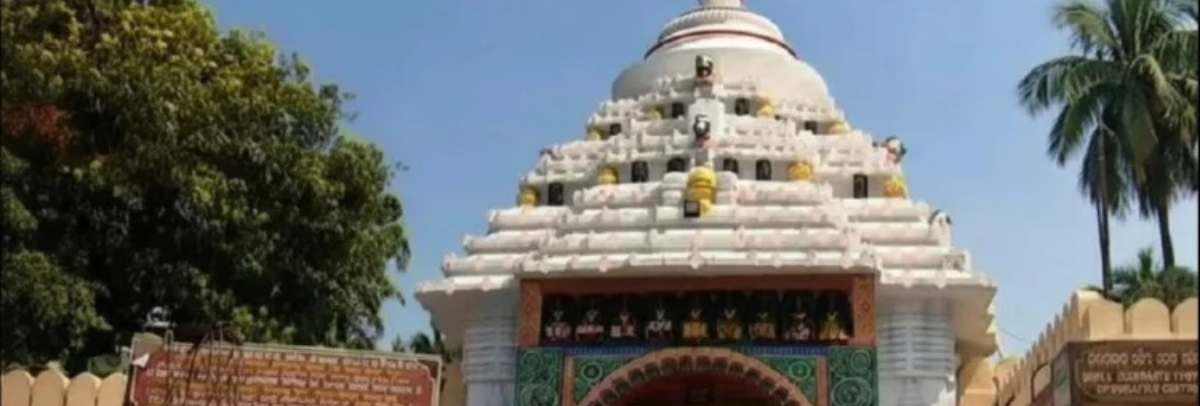
The Jagannath Temple Puri Yatra isn't tied to a single legend. Odisha tells two different stories with equal seriousness, and together they explain why the deities look the way they do, why the chariots leave the temple every year, and why millions continue to gather for the festival centuries later.


The Tale of the Unfinished Idol


Start with Krishna's death: an arrow through the foot, the end of an avatar. His body was cremated, but the bones did not burn. They remained, waiting.


King Indradyumna of Avanti dreamed of Vishnu instructing him to build a temple and carve an idol to house those bones. His men eventually found a glowing neem log washed up near the sea – some traditions identify this with the sacred form of Neel Madhava. Vishwakarma, the celestial architect, agreed to carve it on one condition: he'd work alone, behind closed doors, undisturbed. Fifteen days passed. Then twenty-one days passed.


The anxious queen finally opened the doors too soon.


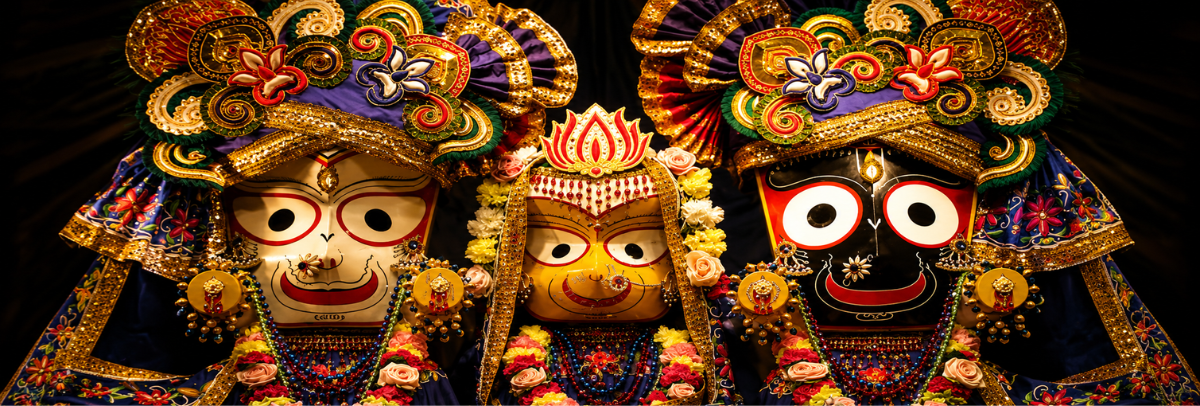
Vishwakarma vanished on the spot, leaving the idols without hands or feet, the carving stopped mid-breath. Brahma appeared and explained this was the form the Lord wished to take. Stumps for arms. Large, startled eyes. Not unfinished — complete, exactly as intended.


That's why Jagannath's face stops you the first time you see it. It isn't supposed to look like Krishna's other forms.


The Tale of the Listening Siblings


The second story explains why the chariots roll at all. Krishna's queens had long been curious about his childhood in Vrindavan. At their request, Rohini agreed to narrate those stories but asked Subhadra to stand guard at the door and make sure no one interrupted.


Krishna and Balabhadra happened to arrive while Rohini was speaking. Rather than disturb her, they quietly stood beside Subhadra and listened. As the stories of Krishna's childhood and the Ras Leela unfolded, something changed. The three siblings became completely absorbed in what they were hearing. Their eyes widened, their expressions softened, and in that moment of overwhelming emotion, their forms transformed.


It was the sage Narada who witnessed this extraordinary sight. Delighted by what he saw, he prayed that Krishna would preserve this form forever so devotees in every age could worship it. Krishna granted the wish. Different details, same outcome: a god content to be seen mid-feeling, not perfectly composed.


Why Does the Lord Leave the Temple Every Year?


Here's where the festival earns its real meaning. Once a year, Jagannath leaves the sanctum and travels roughly three kilometres down Bada Danda to the Gundicha Temple, believed to be his maternal aunt's house. Nine days there, then home again.


It sounds almost domestic, and maybe that's the point. Inside the main temple, certain restrictions on entry have shaped Puri's social history for generations. Rath Yatra erases that boundary, if only for a few days. The chariots stand in the open street. Anyone: a pilgrim, tourist, devotee of another faith can reach the ropes.


The king of Puri himself, the Gajapati, sweeps the road with a golden broom before the chariots move, a reminder that on this road, royal blood means nothing. The Lord doesn't wait for devotees to come to him through the usual channels.


He comes out to where they already are. Perhaps that's the simplest explanation for why the Jagannath Puri Rath Yatra 2026 continues to draw millions every year. At its heart, the festival isn't just about a journey between two temples. It's about a deity who steps beyond the sanctum so that everyone, regardless of who they are, has an equal chance to seek his blessings.


Puri Rath Yatra Rituals


For most visitors, the festival begins when the chariots appear on Bada Danda. In reality, the procession is only one chapter in a much longer sequence of rituals that unfolds over several weeks inside and around the temple.


It begins with Snana Purnima, when the three deities are ceremonially bathed with 108 pots of sacred water drawn from the temple well. The elaborate bathing ceremony is followed by Anasara, a period during which the deities are believed to have fallen ill. Their public darshan stops for about two weeks while temple artists restore and repaint the wooden idols.


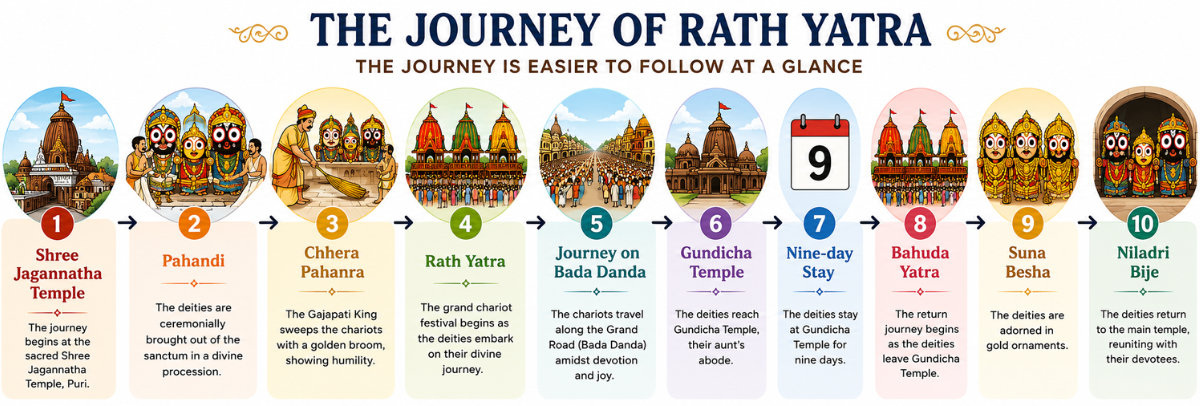
The next major moment is Pahandi. Amid chanting, cymbals and drums, Lord Jagannath, Lord Balabhadra and Goddess Subhadra are carried from the sanctum to their waiting chariots in a slow, swaying procession that often becomes one of the most emotional sights of the festival.


Before the ropes are touched, another ritual quietly changes the mood. The Gajapati Maharaja of Puri arrives not as a king, but as a servant of the Lord. With a golden-handled broom, he sweeps the platforms of the three chariots in the ceremony known as Chhera Pahanra, a reminder that no rank survives before the deity.


Only then does the Jagannath Puri Rath Yatra 2026 truly begin. Thousands of hands reach for the ropes. The chariots roll towards the Gundicha Temple, where the deities remain for nine days before returning during the Bahuda Yatra. Two final ceremonies complete the cycle: Suna Besha, when the deities are adorned with gold ornaments, and Niladri Bije, the ritual marking their return to the sanctum.


The journey is easier to follow at a glance:


The Three Chariots


The three raths may look similar from a distance, but each has its own identity. Their dimensions, colours and even the number of wheels follow traditions that have been preserved for generations.


Chariot Deity Height   Wheels      Canopy Colours   Significance
  Nandighosha   Lord Jagannath   ~45 ft   16   Red & Yellow       The largest chariot, identified by the Garuda emblem. 
  Taladhwaja   Lord Balabhadra   ~45.6 ft     14   Red & Green   Named after the palm-tree emblem carried on its flag.
  Devadalana (Darpadalana)     Goddess Subhadra     ~44.6 ft   12   Red & Black   The smallest chariot, though no less significant in the procession.  


One detail often surprises first-time visitors. None of these chariots are preserved from the previous year. Fresh timber is used every time, and hereditary carpenters known as the Maharanas rebuild all three from scratch, following measurements and methods that have been handed down for centuries.


Jagannath Rath Yatra Pooja Vidhi


If you're celebrating at home rather than travelling to Puri, the rituals need not be elaborate. Clean the prayer area, place images or idols of Lord Jagannath, Lord Balabhadra and Goddess Subhadra, then light a lamp and incense. Offer flowers, fruits, coconut or a simple homemade bhog such as khichdi or poda pitha. Many devotees recite the Jagannath Ashtakam, while others simply spend a few quiet minutes in prayer before performing a short aarti and sharing the prasad with family. The emphasis has always been on devotion rather than grandeur.


Rath Yatra Travel Guide: How to Reach Puri for Rath Yatra


If the Puri Rath Yatra 2026 is on your travel calendar, book early. That applies to almost everything: flights, hotels and even train tickets. Most visitors arrive through Biju Patnaik International Airport in Bhubaneswar, about 60 kilometres away. From there, taxis and buses connect directly to Puri, though travel times stretch considerably once festival crowds begin to gather.


Rail travellers have it slightly easier. Puri's railway station sits close to the temple, and additional services are usually introduced around Rath Yatra week from cities including Bhubaneswar and Kolkata. Driving is certainly possible, but don't judge the route by a map. A journey that normally takes around ninety minutes can take much longer once traffic diversions come into effect.


A few practical things make the day easier. Wear light cotton clothing, carry water, keep valuables to a minimum and reach Bada Danda well before the procession starts. Once the crowd settles into place, moving even a few metres becomes difficult. If you can find a rooftop viewpoint, take it. The view is often better, and so is the breathing space.


Conclusion


By evening, the ropes begin to slacken. The crowds drift away in every direction, leaving behind three enormous wooden chariots that, only hours earlier, had needed thousands of people to move them. By the next morning, Puri slips back into its familiar rhythm until the Lord decides it's time to step out again.


FAQs


Q1. When is Jagannath Rath Yatra 2026?


The main Rath Yatra is on Thursday, July 16, 2026, with the Bahuda Yatra (return journey) on July 24, 2026.


Q2. Why is Jagannath Rath Yatra celebrated?


It marks Lord Jagannath's annual journey from the main temple to the Gundicha Temple, symbolising the Lord stepping outside ordinary restrictions to be among all devotees, regardless of background.


Q3. Can non-Hindus attend?


Yes. The outdoor chariot procession on Bada Danda is open to everyone. Entry into the temple's inner sanctum, however, remains restricted to Hindus.


Q4. How to reach Puri for Rath Yatra?


Fly into Bhubaneswar and drive roughly 60 km to Puri, or take a direct train to Puri railway station, which sits close to the temple itself.


Q5. What are the names of the three chariots?


Nandighosha (Jagannath), Taladhwaja (Balabhadra), and Devadalana, also called Darpadalana (Subhadra).


You Might Also Be Interested In This